Difference Between a Cyst and a Polyp
A cyst is usually a fluid-filled sac, while a polyp is a growth of tissue from an organ's lining. Ovarian cysts and uterine polyps are different conditions, and neither automatically causes infertility. Some cysts, such as endometriomas, may affect ovarian reserve, while certain uterine polyps may interfere with embryo implantation.
 By Dr. Farah GhasemiGynecologist & Obstetrician · Subspecialist in Infertility & IVF
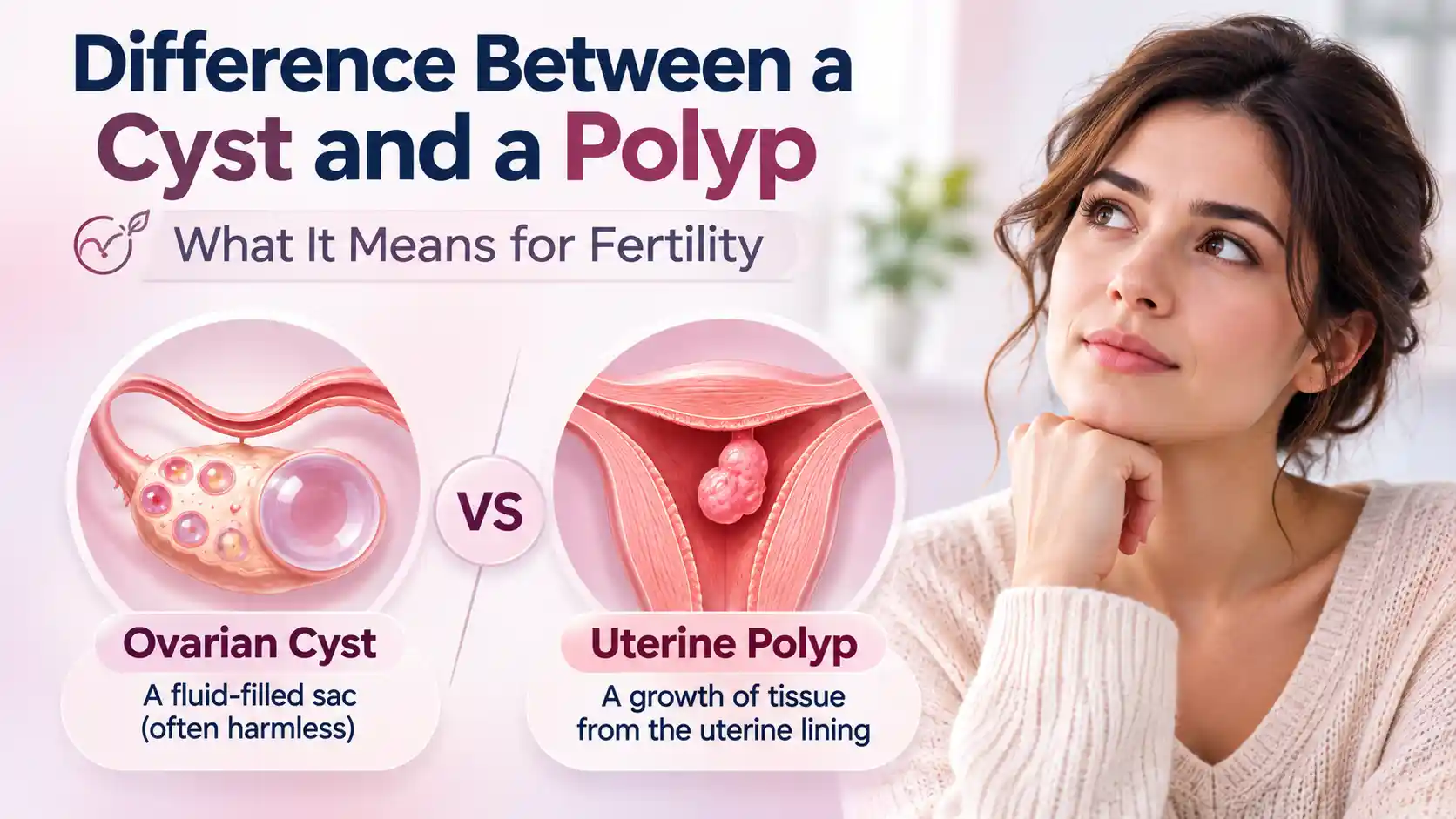
Table of contents11 sections
For people trying to conceive, the most relevant comparison is often between an ovarian cyst and a uterine (endometrial) polyp. Most ovarian cysts do not cause infertility, but certain types may affect ovarian function. Uterine polyps can sometimes interfere with implantation, depending on their size and location.
Cyst vs. Polyp: What Is the Difference?
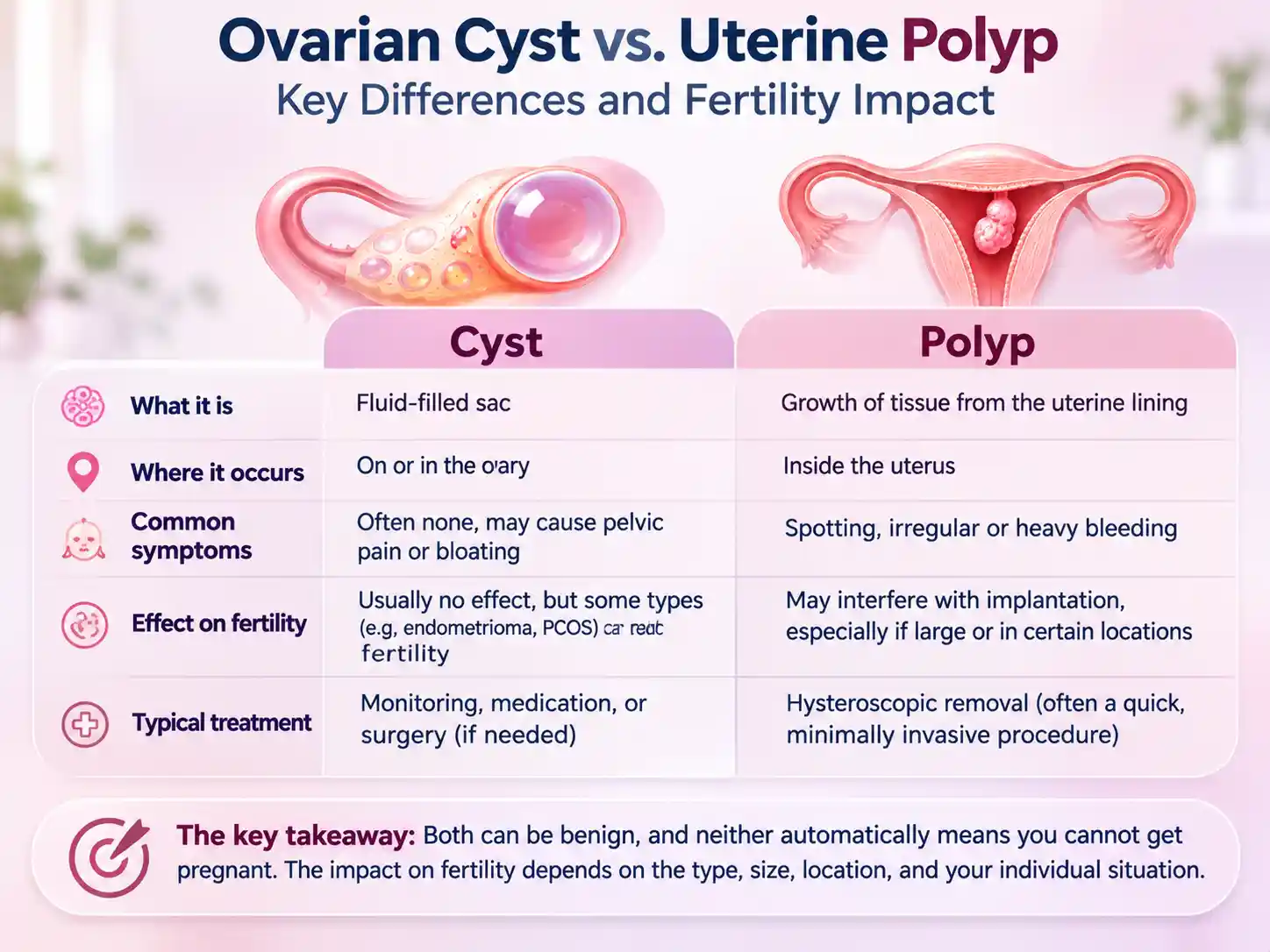
| Feature | Ovarian cyst | Uterine polyp |
|---|---|---|
| Structure | A sac containing fluid or other material | A growth of tissue from the uterine lining |
| Location | In or on an ovary | Inside the uterine cavity |
| Common symptoms | Often none; sometimes pelvic pain | May cause spotting or irregular bleeding |
| Fertility impact | Depends on the cyst type | May affect implantation in some patients |
| Common management | Monitoring or selected treatment | Monitoring or hysteroscopic removal |
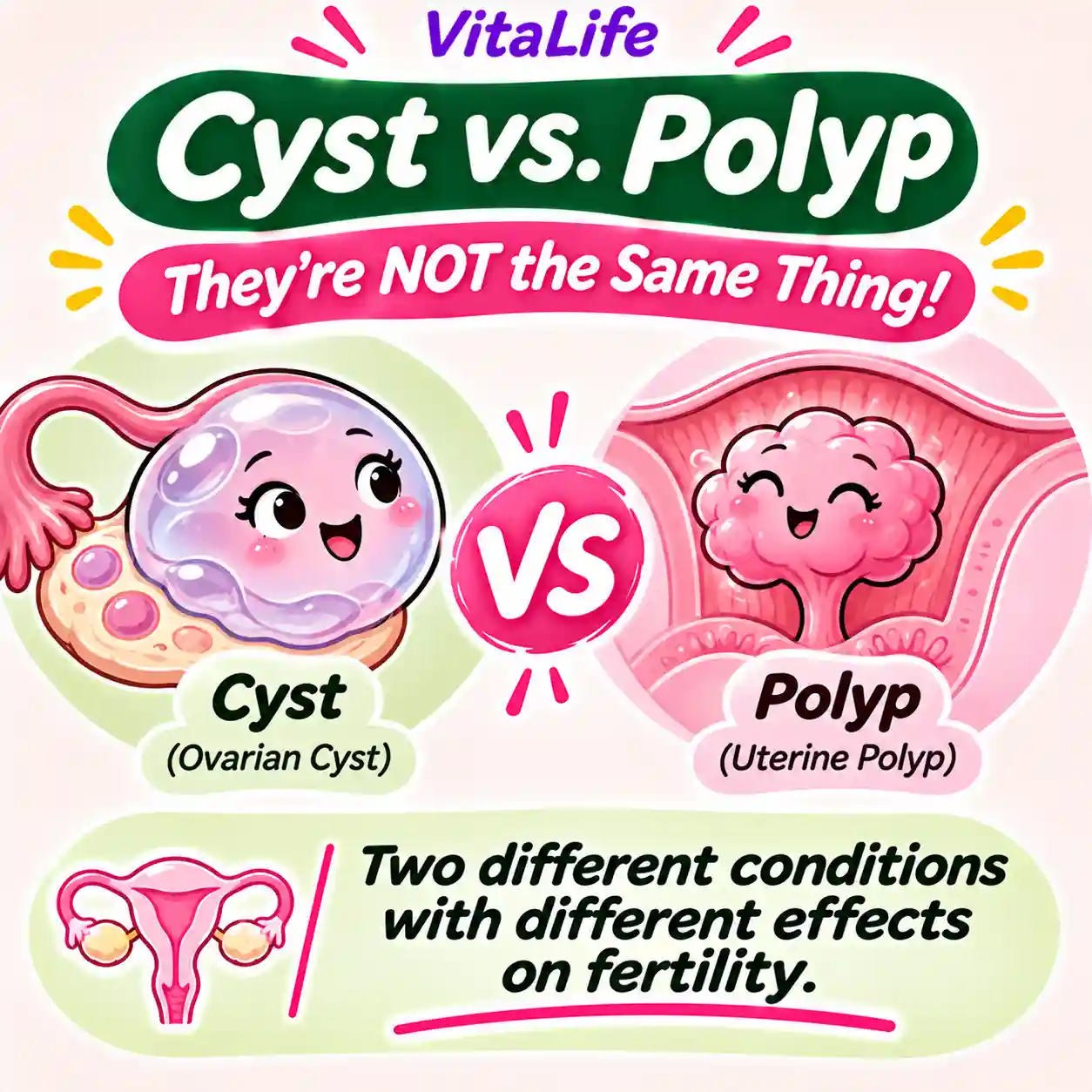
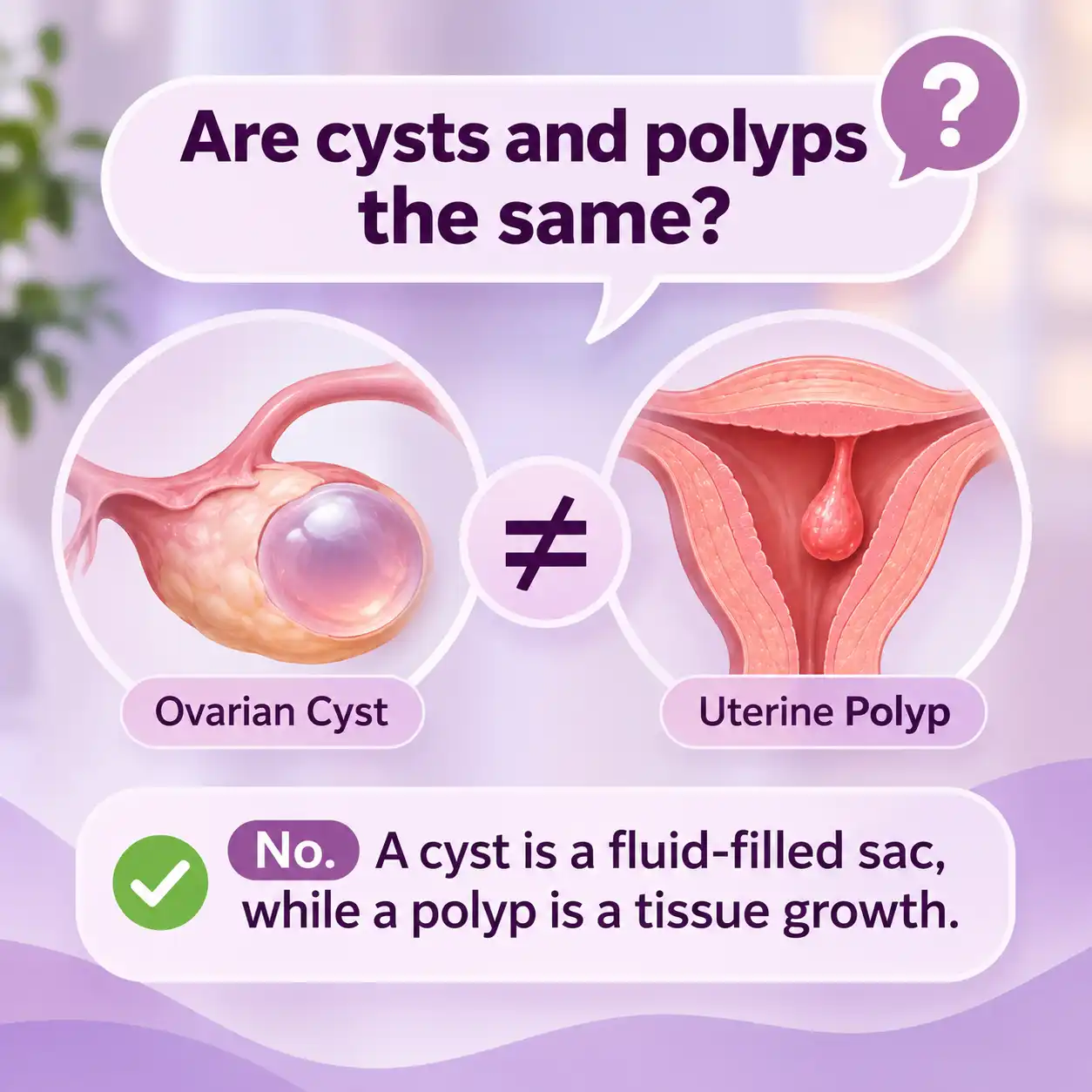
The terms are not interchangeable. A cyst can develop in several organs, while a polyp usually grows from a mucous membrane. Both can be benign, but neither can be fully assessed from its name alone.
What Is an Ovarian Cyst?
An ovarian cyst is a fluid-filled or partly fluid-filled sac that forms in or on an ovary. Functional cysts are common during reproductive years and often disappear without treatment within one or two menstrual cycles.
Other types include endometriomas, which are associated with endometriosis, and dermoid cysts, which may contain different types of tissue.
Do ovarian cysts affect fertility? It depends on the type. Most functional cysts do not cause infertility. Endometriomas may be associated with difficulty becoming pregnant, while PCOS can affect ovulation and fertility through hormonal and metabolic changes.
Surgery also requires careful consideration. Removing an endometrioma can reduce healthy ovarian tissue and ovarian reserve. The ESHRE guideline does not recommend routine endometrioma surgery before IVF solely to improve live-birth rates.
What Is a Uterine Polyp?
A uterine polyp, also called an endometrial polyp, is an overgrowth of tissue attached to the inner lining of the uterus. It may have a broad base or grow on a narrow stalk.
Some polyps cause no symptoms and are discovered during fertility investigations. Others may cause:
- Bleeding between periods.
- Irregular or unusually heavy menstrual bleeding.
- Spotting after intercourse.
- Difficulty conceiving in some cases.
Most endometrial polyps are benign, although a small proportion may contain precancerous or cancerous changes. Their significance depends on factors such as age, symptoms, appearance, and individual risk factors.
Can a Cyst or Polyp Affect IVF Success?
Yes, but in different ways.
An ovarian cyst may influence treatment if it produces hormones, affects ovarian response, causes significant symptoms, or makes access to follicles more difficult during egg retrieval. The fertility specialist needs to identify the cyst type before deciding whether IVF can proceed.
A uterine polyp may affect the environment where an embryo needs to implant. However, finding a polyp does not automatically mean IVF will fail or that surgery is always necessary.
The 2026 British Fertility Society guideline recommends individual decisions based on polyp size, location, reproductive history, and other risk factors. For example, a small polyp found during stimulation may not always require cancelling a fresh transfer, while a larger polyp may lead the team to consider freezing embryos and removing it before a later transfer.
How Are Cysts and Polyps Diagnosed?
Transvaginal ultrasound is commonly used to examine the ovaries and uterus. It can help identify ovarian cysts and suggest the presence of an endometrial polyp.
If a uterine polyp needs further assessment, saline infusion sonography or hysteroscopy may provide a clearer view of the uterine cavity. Hysteroscopy also allows a doctor to remove a polyp when appropriate.
The right investigation depends on the ultrasound findings, symptoms, fertility history, and treatment plan.
Do You Need Treatment Before IVF?
Not always. Some ovarian cysts only need repeat ultrasound monitoring, while others require further investigation or treatment. Endometriomas should be assessed carefully because surgery may affect ovarian reserve.
For uterine polyps, removal may be considered before IVF, particularly when the polyp is large, causes abnormal bleeding, or is associated with previous implantation problems. However, evidence that removing every small polyp improves IVF live-birth rates remains limited.
If you are considering IVF treatment in Iran, your medical records and ultrasound findings can help the treating fertility specialist determine whether additional assessment is needed before treatment.
The important point is that neither a cyst nor a polyp automatically means you cannot become pregnant. The diagnosis, location, size, symptoms, ovarian reserve, and reproductive history all matter.
Frequently Asked Questions
Can you have an ovarian cyst and a uterine polyp at the same time?
Yes. They develop in different reproductive organs, so both can be present in the same person.
Which is worse for fertility: a cyst or a polyp?
Neither is automatically worse. Some ovarian cysts have little effect on fertility, while endometriomas may affect ovarian reserve. Uterine polyps may interfere with implantation in selected cases.
Does every uterine polyp need to be removed before IVF?
No. The decision depends on its size, location, symptoms, medical history, and previous fertility outcomes. Some small polyps can be monitored rather than removed immediately.
Can an ovarian cyst disappear without surgery?
Yes. Many functional ovarian cysts resolve naturally over several weeks. Other types may persist and need monitoring or treatment.
Comments 1
Share a question or experience related to this article. Comments appear after review by our team.
I recently had an ultrasound that showed a small uterine polyp and an ovarian cyst. I'm planning to start IVF soon, and I'm wondering if both conditions need to be treated before beginning stimulation, or if treatment can proceed without removing them. What factors should a fertility specialist consider?
Thank you for your question! Not every ovarian cyst or uterine polyp needs to be removed before IVF. The decision depends on their type, size, location, and potential impact on fertility. A fertility specialist should review your ultrasound findings to determine the best treatment plan.