A little life, a world of love.
ICSI in Iran is an IVF technique in which an embryologist injects a single selected sperm directly into a mature egg. It is commonly used for male-factor infertility, very low sperm count, surgically retrieved sperm, or previous failed fertilization with conventional IVF. At VitaLife, estimated ICSI treatment costs range from $2,500 to $4,200.
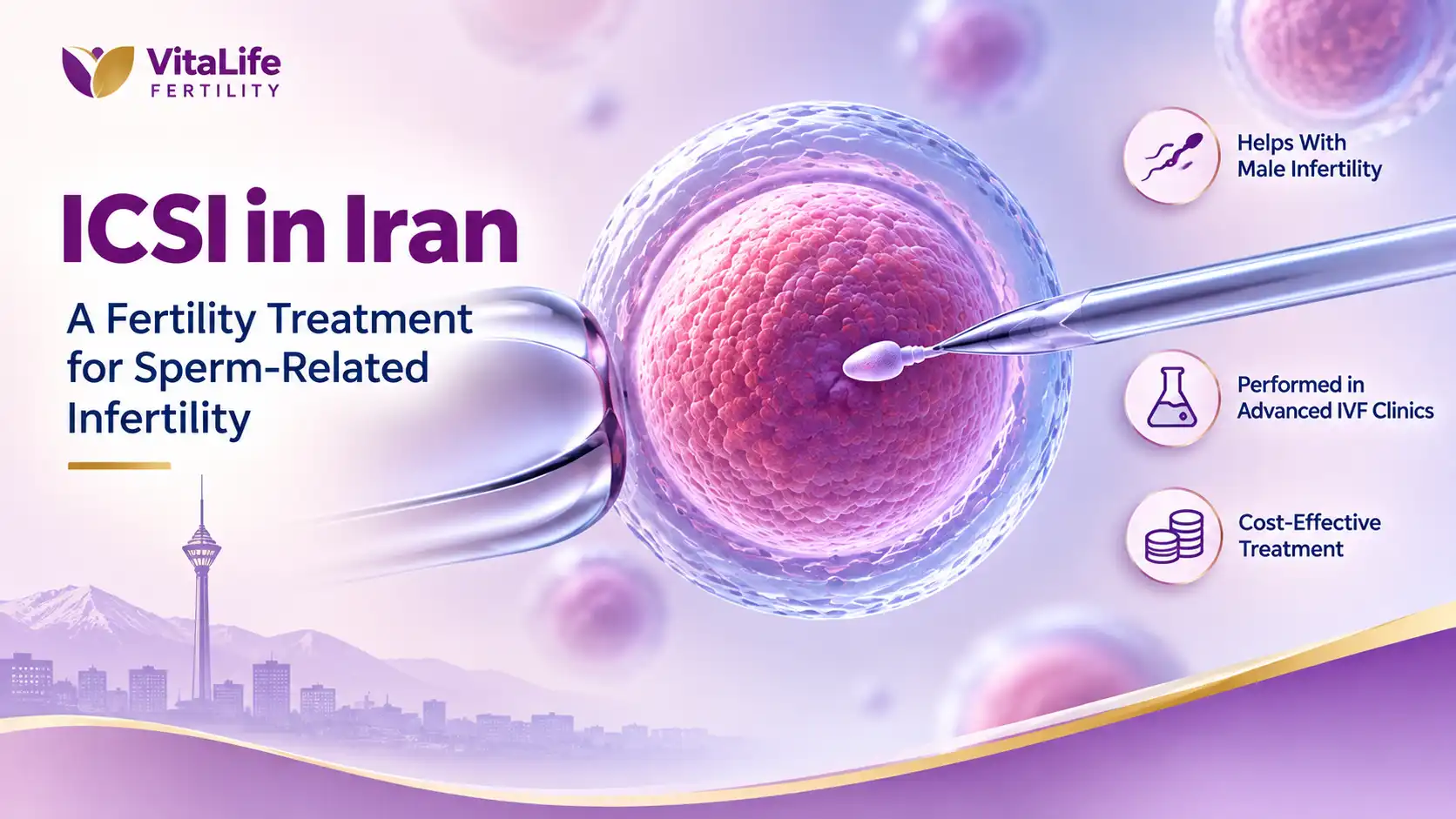
ICSI is performed as part of an IVF cycle, but it differs from conventional IVF in how fertilization happens. Instead of placing sperm and eggs together in a laboratory dish, an embryologist uses specialized equipment to inject one sperm into the egg.
At VitaLife, we help international patients arrange ICSI treatment in Iran through our partner fertility clinics. The treatment plan depends on your fertility history, semen analysis, and previous treatment results. Here's what you need to know about who may benefit from ICSI, how the procedure works, its cost in Iran, and what to expect during treatment.
ICSI (intracytoplasmic sperm injection) is a method of infertility treatment performed as part of IVF. During the procedure, an embryologist injects one selected sperm directly into a mature egg in the laboratory to help fertilization occur. Doctors commonly use ICSI when male infertility, such as low sperm count or poor sperm motility, makes fertilization difficult.
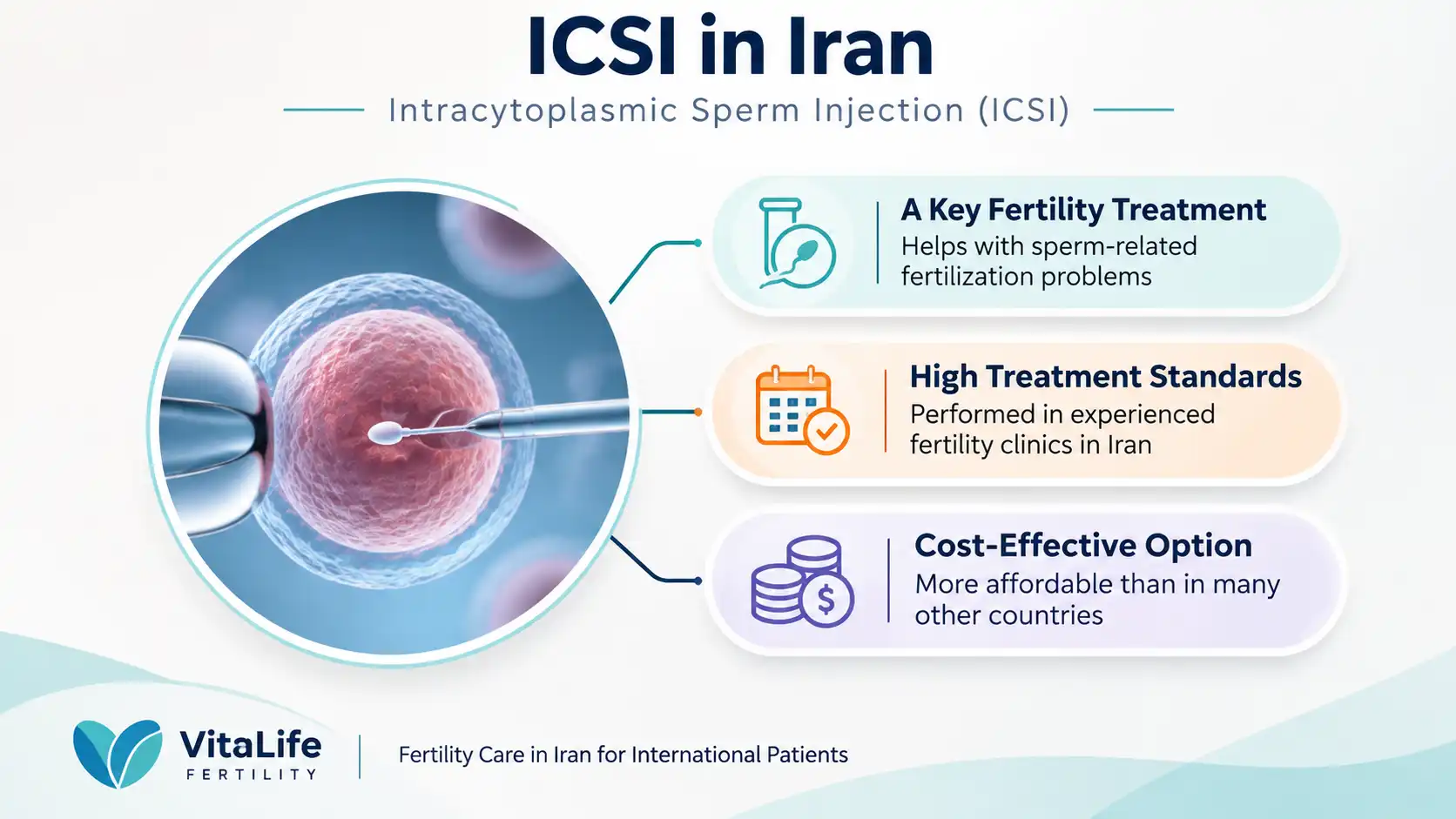
Your fertility specialist may recommend ICSI when sperm-related factors make conventional fertilization less likely or when a previous IVF cycle resulted in poor or failed fertilization.
Common situations include:
A single abnormal semen result does not automatically mean you need ICSI. Your doctor should review the full semen analysis, medical history, previous treatment results, and the female partner's fertility assessment before selecting the fertilization method.
Male-factor infertility is one of the main reasons doctors recommend ICSI. A semen analysis checks sperm count, movement, and shape. If the results are abnormal, your doctor may recommend further tests to identify the cause.
ICSI can help overcome some sperm-related fertilization problems, but it cannot repair sperm DNA or correct an underlying genetic condition.
Sometimes. Azoospermia means that a semen analysis does not identify sperm in the ejaculate. It does not always mean that the testes contain no sperm.
Doctors first investigate whether a blockage prevents sperm from reaching the semen or whether the testes produce very few sperm. This distinction matters because it affects the available treatment options.
For obstructive azoospermia, a specialist may retrieve sperm from the epididymis or testicles. For selected men with non-obstructive azoospermia, the doctor may recommend Micro-TESE, a microsurgical technique that searches testicular tissue for small areas of sperm production.
If the procedure produces usable sperm, the embryology team can prepare it for ICSI. However, sperm retrieval does not succeed in every case. The likelihood depends on the cause of azoospermia and the man's clinical findings. [4]
Some men cannot provide sperm through ejaculation, or their semen contains no usable sperm. In these cases, the fertility team may coordinate a surgical sperm retrieval procedure.
Depending on the diagnosis, specialists may consider:
Doctors do not use these procedures interchangeably. The urologist or male fertility specialist selects the approach according to the cause of the sperm problem, previous investigations, and the likelihood of retrieving usable sperm.
Once the laboratory receives a suitable sample, the embryologist can prepare individual sperm cells for injection into mature eggs. [4]
ICSI is a useful technique, but it is not automatically the best choice for every IVF cycle.
The 2026 American Society for Reproductive Medicine (ASRM) committee opinion does not recommend routine ICSI for patients who have no male-factor infertility or previous fertilization failure. Evidence has not shown that routinely injecting sperm into every egg improves live-birth rates in these patients. [1]
The following factors alone do not establish a clear reason to use ICSI:
For example, a patient with low ovarian reserve may produce only a few eggs during stimulation. That does not mean ICSI will improve the number of embryos or the chance of a live birth when semen parameters are normal.
PGT-M is different from PGT-A. Your clinic may recommend ICSI with PGT-M to reduce the risk of sample contamination during testing. However, PGT-A alone does not establish a routine indication for ICSI. [1]
The goal is to choose the fertilization method that fits your medical situation, not automatically use the most technically advanced procedure.
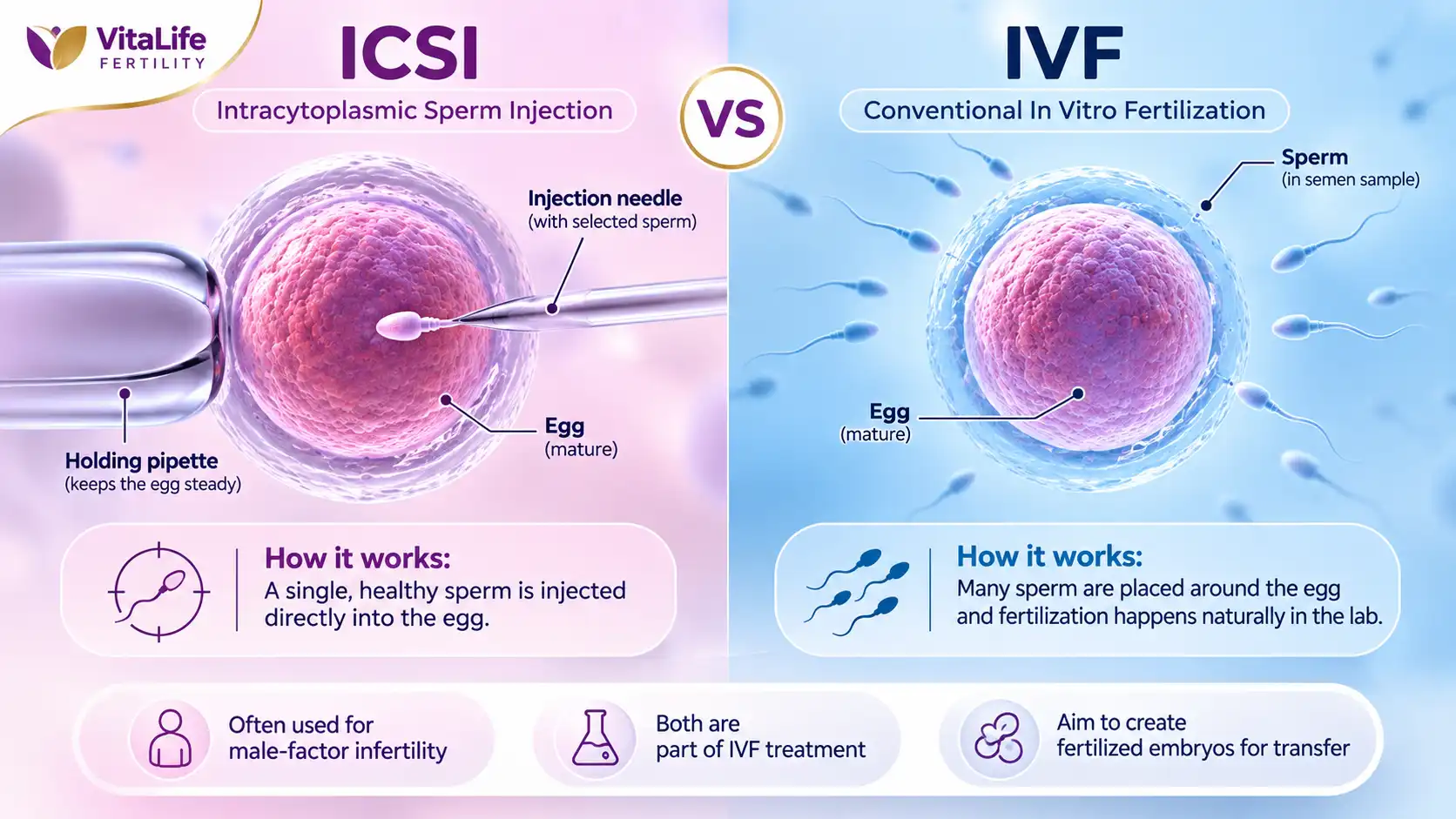
Both methods fertilize eggs outside the body, but they handle sperm differently.
| Feature | Conventional IVF | ICSI |
|---|---|---|
| Fertilization method | The laboratory places prepared sperm around the eggs | An embryologist injects one selected sperm into each mature egg |
| Sperm selection | Sperm compete to penetrate the egg | The embryologist selects an individual sperm |
| Common use | Couples without a significant male-factor problem | Couples with relevant male-factor infertility or previous fertilization failure |
| Need for direct injection | No | Yes |
| Laboratory requirements | Standard IVF laboratory procedures | Requires micromanipulation equipment and trained embryologists |
| Additional cost | Standard IVF cost | May cost more depending on the clinic and treatment plan |
Neither method guarantees fertilization or pregnancy. Your doctor chooses the appropriate method based on sperm quality, egg characteristics, and previous treatment results.
ICSI follows the same general treatment process as IVF. The main difference happens in the laboratory, where an embryologist injects a selected sperm directly into a mature egg.
Here are the main stages of treatment.
The doctor reviews both partners' medical histories, previous fertility treatments, semen analysis, hormone tests, and ultrasound results.
The male partner's assessment is particularly important. The doctor needs to understand the cause of any sperm problems and decide whether ICSI is appropriate.
At VitaLife, we ask international patients to share their medical records before travelling. We then coordinate an initial assessment with our partner fertility clinic.
The female partner takes fertility medications to stimulate the ovaries and help multiple follicles develop. The doctor monitors their growth through ultrasound scans and may adjust medication doses based on the response.
This stage follows the same general IVF treatment process, whether you have conventional IVF or ICSI.
When the follicles are ready, the doctor schedules a trigger injection to prepare the eggs for final maturation. Egg retrieval usually takes place around 34–36 hours after an hCG trigger, depending on the protocol. [5]
The doctor collects the eggs using a needle guided by transvaginal ultrasound, usually under sedation or anesthesia. The laboratory then checks which eggs are mature enough for ICSI. Not every retrieved egg will be mature or suitable for injection.
You can learn more about this procedure in our guide to the egg retrieval process.
The male partner usually provides a semen sample on the day of egg retrieval. The laboratory examines and prepares the sample before selecting individual sperm for injection.
If the doctor has arranged surgical sperm retrieval, the laboratory can prepare the retrieved sample instead. The embryologist selects sperm based on their appearance and movement.
This is the key step that distinguishes ICSI from conventional IVF.
The embryologist uses a specialized microscope and fine instruments to hold a mature egg in place and inject one selected sperm directly into it.
The laboratory performs this procedure on each mature egg selected for ICSI. Because the injection requires precision and specialized equipment, the embryology team's experience and laboratory quality are important. [6]
The embryology team checks the eggs after injection to see which ones have fertilized normally. This assessment usually takes place around 16–17 hours after ICSI.
The embryologist looks for two pronuclei (2PN), a common sign of normal fertilization. [6] However, not every injected egg will fertilize. The laboratory continues to culture the embryos that meet its criteria.
After fertilization, the embryos remain in the laboratory under controlled conditions. The embryology team monitors their development over the next few days.
Some embryos reach the cleavage stage around day 2 or 3, while others continue developing into blastocysts, usually by day 5 or 6. The team assesses their development before recommending transfer or freezing.
Our guide to embryo grading in IVF explains how embryologists assess embryo quality.
The doctor decides whether to transfer an embryo during the same cycle or freeze it for a later transfer. The decision depends on embryo development, hormone levels, and the condition of the uterine lining.
A fresh embryo transfer takes place a few days after egg retrieval, without freezing the embryo first. A frozen embryo transfer takes place in a later cycle, allowing more time for uterine preparation or genetic testing when needed.
Using ICSI does not determine which transfer method you will have. Your doctor recommends the option that best fits your treatment plan.
ICSI follows the same main treatment schedule as IVF because both methods require ovarian stimulation, egg retrieval, embryo development, and transfer.
For international patients, VitaLife's partner clinics generally use two planning options:
| Treatment plan | Estimated time in Iran |
|---|---|
| Fresh embryo transfer | Approximately 21 days |
| First visit for egg retrieval and embryo freezing | Approximately 14 days |
| Second visit for frozen embryo transfer | Approximately 2–16 days |
These estimates depend on your menstrual cycle, ovarian response, embryo development, endometrial preparation, and the doctor's recommendation.
Some patients complete stimulation, egg retrieval, and embryo transfer during one visit. Others return home after egg retrieval and travel back when the clinic schedules their frozen embryo transfer.
We coordinate the expected treatment dates with the clinic before you book your flights. The medical team confirms the actual schedule after reviewing your case.
There is no single success-rate percentage that applies to every ICSI patient in Iran.
ICSI can help sperm fertilize an egg when male-factor infertility creates a barrier to conventional fertilization. However, successful fertilization does not guarantee embryo development, implantation, pregnancy, or live birth.
Several factors influence the outcome:
This distinction matters when comparing clinic success figures.
| Measurement | What it tells you |
|---|---|
| Fertilization rate | The proportion of injected mature eggs that fertilize |
| Clinical pregnancy rate | The proportion of transfers that result in a clinical pregnancy |
| Live birth rate | The proportion of treatments or transfers that result in a live birth |
| Cumulative live birth rate | The chance of a live birth across the included fresh and frozen embryo transfers |
ICSI can improve fertilization in appropriate male-factor cases, but it does not automatically increase pregnancy or live-birth rates compared with conventional IVF. In patients without a clear indication, current ASRM guidance does not support routine ICSI as a way to improve live-birth outcomes. [1]
When you compare clinics, ask whether their reported figure represents fertilization per mature egg, pregnancy per embryo transfer, or live birth per treatment cycle. Our IVF success rate guide explains why these measurements are not interchangeable.
ICSI is an established fertility treatment, but it has limitations and some risks that you should understand before starting.
Egg damage during injection: The embryologist must hold and inject each egg using very fine instruments. Some eggs may become damaged during this process and may no longer be suitable for treatment.
Fertilization may still fail: Direct injection helps bypass certain sperm-related barriers, but it cannot guarantee that an egg will fertilize. Egg activation and other cellular factors still play a role.
Genetic considerations: Some causes of severe male infertility have a genetic basis. ICSI does not remove these genetic factors, and a child may inherit an underlying condition from the biological father. Your doctor may recommend genetic testing and counselling before treatment.
Possible risks to children: Research has reported a small association between ICSI and certain birth or developmental conditions. However, researchers have not established whether ICSI itself causes these outcomes or whether some of the risk comes from the underlying infertility. [7]
Risks related to IVF: Because ICSI takes place within an IVF cycle, patients also face the usual risks of ovarian stimulation, egg retrieval, and embryo transfer. These include medication-related effects, ovarian hyperstimulation syndrome in susceptible patients, and complications associated with egg retrieval.
Multiple pregnancy: The number of embryos transferred influences the chance of a multiple pregnancy. ICSI itself does not require the clinic to transfer more than one embryo. The treating doctor should discuss the appropriate transfer strategy with you.
Your fertility specialist should review these considerations before treatment and explain which risks apply to your medical situation.
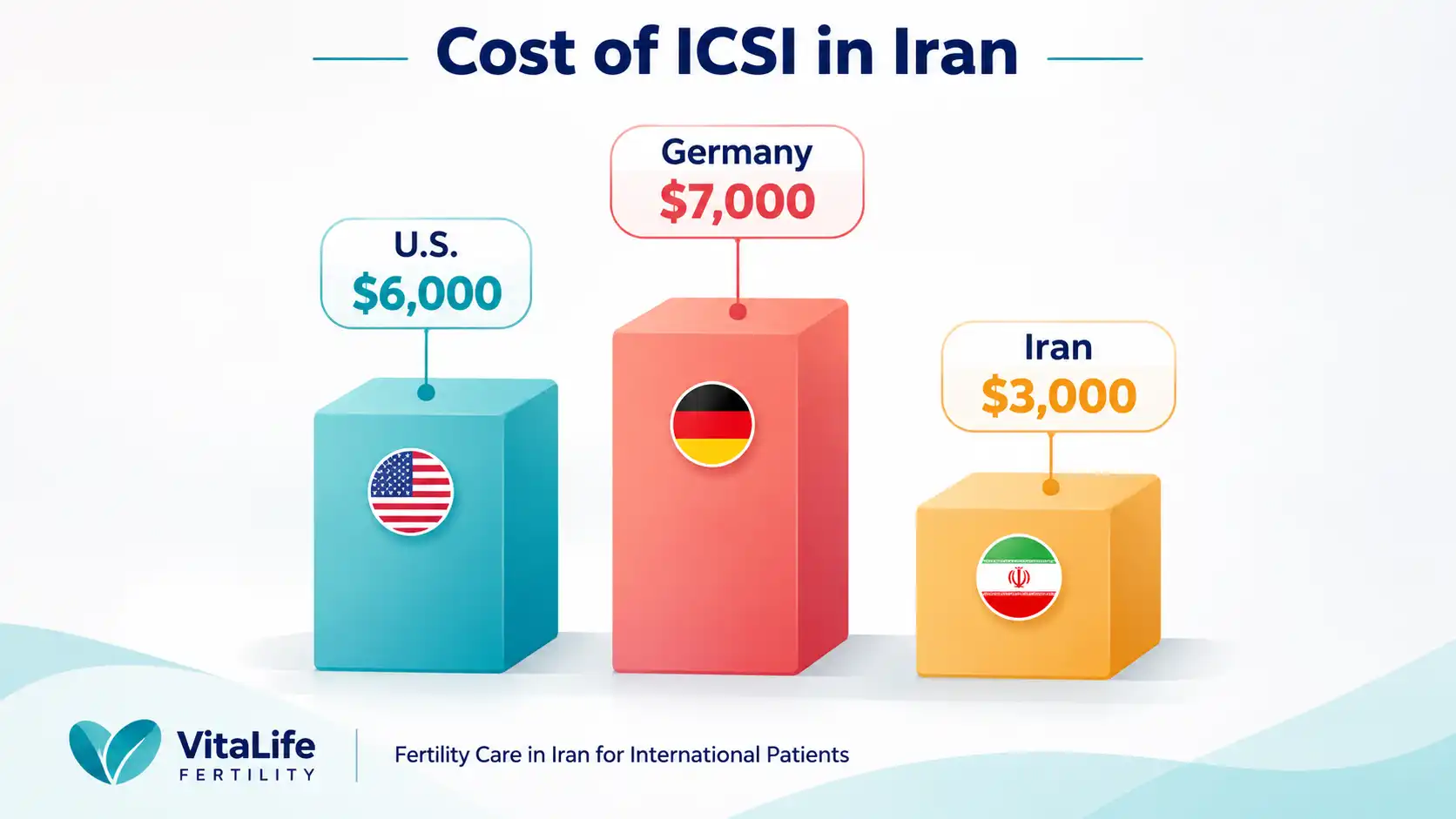
At VitaLife, our current estimated price range for ICSI treatment in Iran is $2,500–$4,200.
The final cost depends on the treatment plan, clinic, medication requirements, laboratory procedures, and any additional services you need.
| Treatment | Estimated price |
|---|---|
| IVF | $2,500–$4,200 |
| ICSI | $2,500–$4,200 |
ICSI and conventional IVF share most of the same treatment stages. The main additional procedure takes place in the embryology laboratory, where the embryologist injects selected sperm into mature eggs. The clinic's quote should explain the laboratory services and medication included in your specific plan.
You may also need additional procedures if the male partner has azoospermia or another condition that requires surgical sperm retrieval. The clinic should assess these costs separately rather than treating every ICSI cycle as an identical package.
If you need eggs from a donor, the clinic will prepare a different treatment plan. Our egg donation service in Iran explains how donor eggs can become part of an IVF or ICSI treatment pathway.
These figures are estimates, not a final quotation. We coordinate an individualized cost breakdown with the partner clinic after reviewing your medical information.
Travelling abroad for fertility treatment involves more than arranging an appointment. You may need to prepare medical records, coordinate tests, plan your stay, and understand how the clinic will schedule each treatment stage.
At VitaLife, we help international patients organize these steps through our partner fertility clinics.
Our team can help you with:
The fertility specialist and embryology team make all clinical decisions, including whether conventional IVF or ICSI is the right fertilization method. We help you coordinate the process and understand the treatment plan before you travel.
Contact VitaLife to discuss ICSI treatment in Iran and plan your next steps.
No. ICSI allows the embryologist to inject a selected sperm directly into a mature egg, but not every injected egg fertilizes normally. Egg maturity, sperm characteristics, and other cellular factors can influence the result.
ICSI can improve fertilization when the couple has a relevant sperm problem or previous fertilization failure. However, it does not automatically improve pregnancy or live-birth rates, especially when the couple has no male-factor infertility. [1, 2]
Not by itself. Low AMH and a low egg yield do not establish a clear indication for ICSI when sperm parameters are normal. The doctor should choose the fertilization method according to the full clinical picture.
Yes. Clinics commonly use ICSI to fertilize previously frozen mature eggs, although the treating team should review the circumstances and available evidence before choosing the method.
No. ICSI helps fertilize an egg; it does not select or determine the embryo's sex. Embryo genetic testing is a separate procedure with a different purpose and eligibility requirements.
If the clinic performs a fresh embryo transfer during the same visit, the estimated stay is around 21 days. If you freeze the embryos and return for a later transfer, you may need a first visit of approximately 14 days and a second visit of around 2–16 days, depending on the protocol and your medical response.
VitaLife's current estimated ICSI price range is $2,500–$4,200. Additional procedures, medication requirements, or surgical sperm retrieval may change the total cost.
Yes. The clinic can use ICSI with donor eggs when the medical team recommends this fertilization method. Your treatment plan will depend on the egg source, sperm findings, and the requirements of the partner clinic.
American Society for Reproductive Medicine (ASRM). Intracytoplasmic Sperm Injection for Nonmale Factor Indications: A Committee Opinion. Fertility and Sterility. 2026;126:49–56. Read the 2026 committee opinion.
National Institute for Health and Care Excellence (NICE). Fertility Problems: Assessment and Treatment. Guideline NG257. Published March 31, 2026. Read the ICSI recommendations and rationale.
NICE. Investigation of Fertility Problems and Management Strategies. Guideline NG257, male-factor fertility assessment. Read the recommendations.
American Urological Association and ASRM. Diagnosis and Treatment of Infertility in Men: Guideline Part II. Read the guideline.
European Society of Human Reproduction and Embryology (ESHRE). Recommendations on Good Practice in the IVF Laboratory. Human Reproduction. 2026. Read the laboratory recommendations.
American Society for Reproductive Medicine. Comprehensive Guidance for Human Embryology, Andrology, and Endocrinology Laboratories: Management and Operations. Committee Opinion. 2022. Read the laboratory guidance.
Human Fertilisation and Embryology Authority (HFEA). Intracytoplasmic Sperm Injection (ICSI). Patient information on treatment indications, success, and risks. Read the ICSI guide.
A little life, a world of love.
The beginning of a beautiful new chapter.
Small moments. A lifetime of meaning.
A precious new beginning.
A precious new beginning.
A precious new beginning.
A little miracle, a lifetime of love and hope.
Every tiny hand holds a dream come true for a family
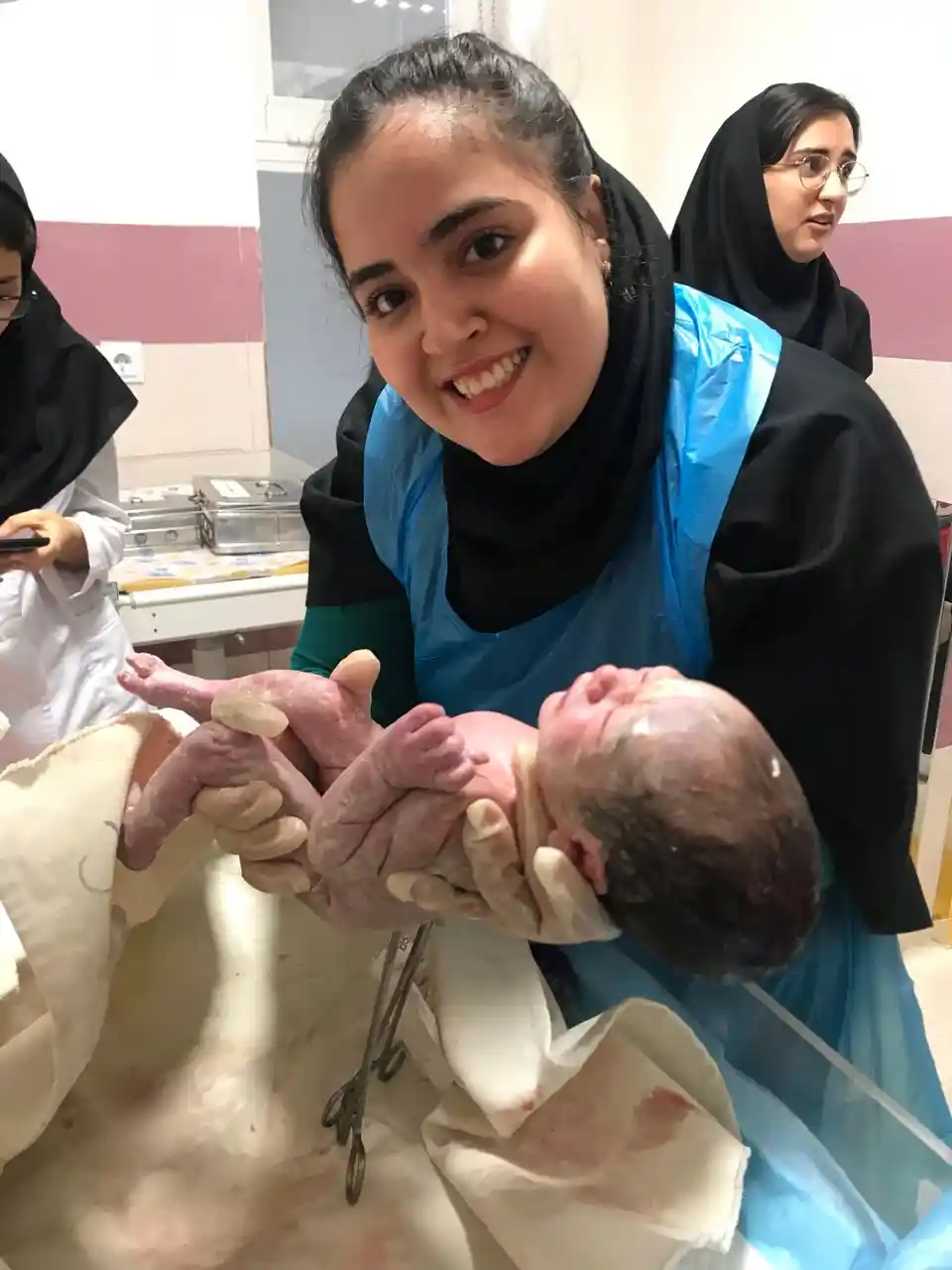
One beautiful beginning, after years of hope and love.
The sweetest answer to a family's heartfelt prayers.
A new chapter begins with the smallest, sweetest smile.

Little feet, endless love, and a dream finally fulfilled.
Some dreams arrive wrapped in the tiniest bundle of joy.
After every wait, a new reason to smile and believe.
A precious new life makes every hopeful moment worthwhile.

Love grows in ways we once only dreamed possible.
The smallest arrival can bring the biggest happiness.
Meet the specialists supporting fertility care and treatment planning.

Obstetrician and Gynecologist; Fellowship in Infertility and IVF
Infertility and Reproductive Medicine, In Vitro Fertilization (IVF), Obstetrics and Gynecology

Obstetrics & Gynecology | Women’s Health | Reproductive Health

Urologist · Men’s Infertility
Explore the medical center supporting treatment coordination.

Baharan Negar Infertility Clinic is a fertility treatment center located near Vanak Square in Tehran, Iran. The clinic provides reproductive medicine services for individuals and couples experiencing infertility. Its reported services include in vitro ferti...
View Clinic ProfileTalk with VitaLife about your options, practical arrangements and questions to raise with your treating specialist.
Request a consultation