When to Have Sex After a Trigger Shot
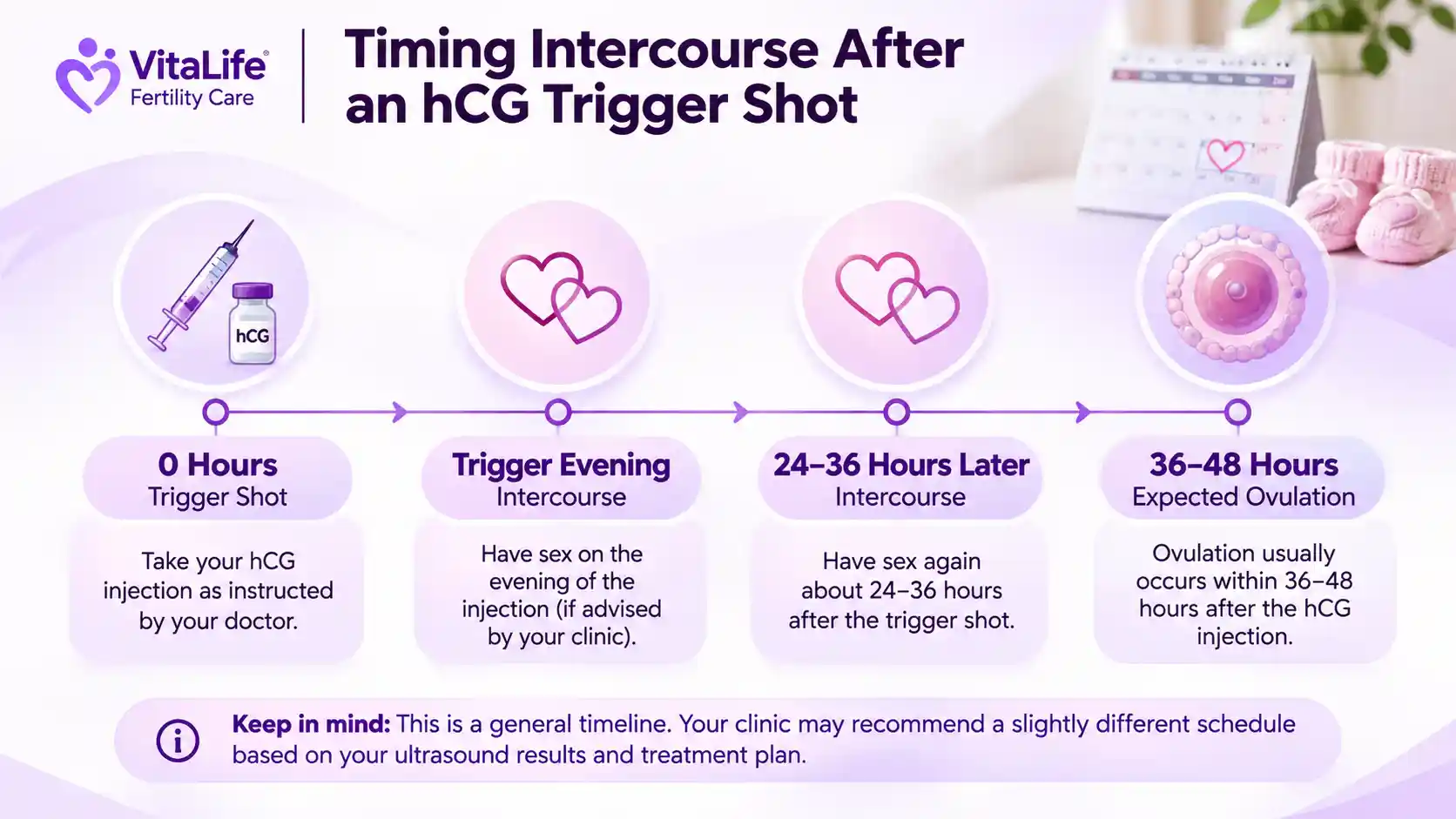
After an hCG trigger shot, ovulation usually occurs within 36–48 hours. Many fertility clinics recommend having sex on the evening of the injection and again 24–36 hours later to cover the fertile window. Follow your doctor's specific timing instructions for your cycle.
 By Dr. Farah GhasemiGynecologist & Obstetrician · Subspecialist in Infertility & IVF
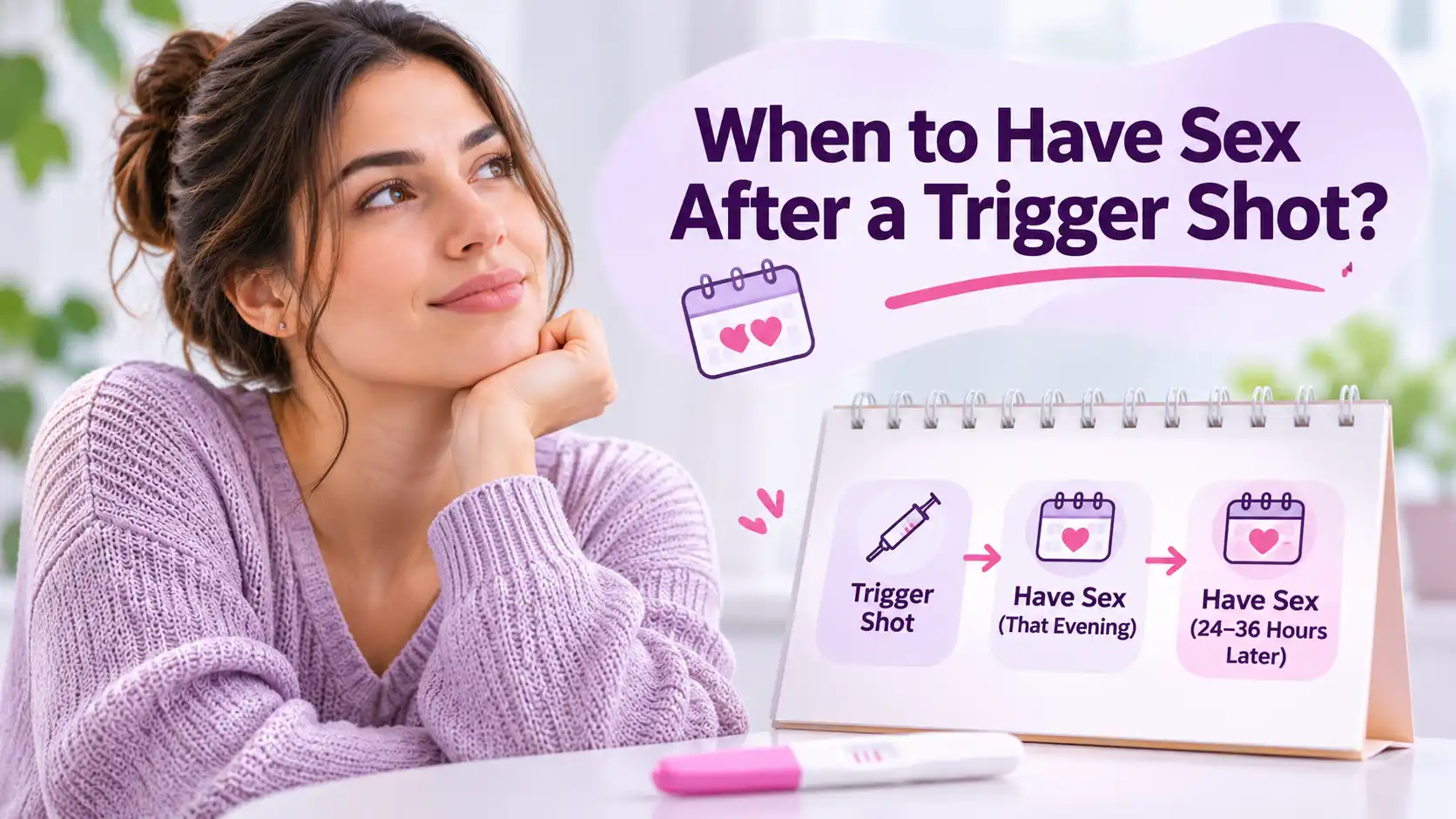
Table of contents7 sections
For many people having timed intercourse after an hCG trigger shot, a practical schedule is to have sex on the evening of the injection and again about 24–36 hours later. Your fertility team may recommend a slightly different schedule based on your ultrasound results, medication, and treatment plan.
When should you have sex after a trigger shot?
An hCG trigger shot helps complete egg maturation and prepares the ovary for ovulation. According to the American Society for Reproductive Medicine (ASRM), ovulation usually occurs about 36–48 hours after an hCG trigger. Having intercourse before ovulation gives sperm time to reach the fallopian tubes, where fertilization can occur.
Many fertility clinics use a schedule similar to this:
| Timing | What to do |
|---|---|
| Evening of the trigger shot | Have intercourse if your clinic has not advised otherwise. |
| 24–36 hours after the injection | Have intercourse again to cover the expected ovulation window. |
| Following day | Your clinic may recommend another attempt, depending on your protocol. |
For example, if you take your trigger shot at 8 p.m. on Monday, your clinic may advise intercourse that evening and again on Tuesday evening or Wednesday morning. Follow the exact timing your clinic gives you rather than relying on this example.
Some clinics recommend intercourse on the trigger night and the following evening. Others advise a different interval. These schedules can vary, so there is no single timetable that suits every cycle.
Do you need to have sex more than once after the trigger shot?
Usually, you do not need to have intercourse several times a day. The goal is to cover the fertile window, not to achieve a specific number of attempts.
ASRM defines the fertile window as the six days ending on ovulation day. Its guidance recommends intercourse every one to two days during this period to maximize the chance of conception. Daily intercourse is also acceptable for couples who prefer it.
In a medicated cycle, however, your clinic may give you a more specific schedule based on follicle development and the expected time of ovulation. Follow that plan, especially if your partner has a semen-related fertility concern.
What if you miss the trigger-night timing?
Missing intercourse on the evening of your injection does not automatically mean you have missed the chance to conceive. Ovulation usually occurs later, not immediately after an hCG injection.
Contact your fertility clinic and ask whether you should have intercourse later that night or during the following 24–36 hours. Do not change your medication schedule or take another trigger injection to compensate.
Does the timing change with IUI or IVF?
Yes. Timed intercourse, intrauterine insemination (IUI), and IVF follow different schedules.
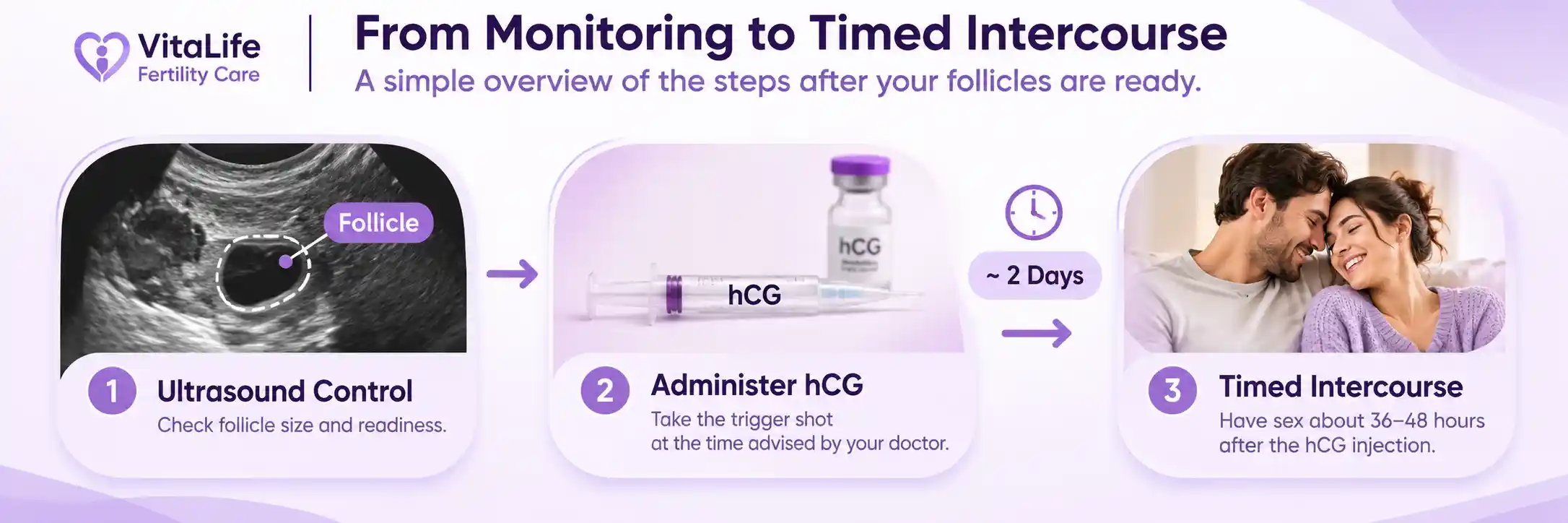
With timed intercourse, you and your partner plan intercourse around the expected ovulation window. Your clinic may recommend intercourse on the trigger evening and again 24–36 hours later.
With IUI, the clinic prepares and places sperm directly into the uterus at a scheduled time. You should follow its instructions about intercourse and ejaculation before the procedure. Some clinics recommend abstaining during a specific interval to protect the semen sample.
With IVF, the trigger shot prepares the eggs for retrieval rather than natural conception through intercourse. Your clinic may restrict intercourse during ovarian stimulation or after the trigger because enlarged ovaries can cause discomfort and increase the risk of complications.
When should you avoid intercourse after a trigger shot?
Ask your clinic before having unprotected sex if you have several mature follicles or a strong response to ovarian stimulation. Multiple mature follicles can increase the risk of a multiple pregnancy. In some cycles, your doctor may recommend avoiding intercourse or cancelling the cycle to reduce that risk.
You should also contact your clinic if you develop significant pelvic pain, marked abdominal swelling, or other symptoms that concern you. Do not continue intercourse if it causes pain.
Does lying down after intercourse improve the chance of pregnancy?
No special sexual position or post-intercourse routine has been shown to improve natural fertility. You do not need to raise your legs or remain in bed for a specific amount of time after intercourse. Semen leaking from the vagina afterward is normal and does not mean that all sperm have been lost.
The most useful approach is to follow your clinic's timing instructions and cover the expected fertile window without putting unnecessary pressure on yourself.
References
Comments 0
Share a question or experience related to this article. Comments appear after review by our team.
No comments yet. You can start the conversation.