Egg Retrieval Process
The egg retrieval process usually takes 10–20 minutes and is performed under sedation or anesthesia. Learn how eggs are collected during IVF, how to prepare, what recovery feels like, and what happens to the eggs after retrieval.
 By Dr. Farah GhasemiGynecologist & Obstetrician · Subspecialist in Infertility & IVF
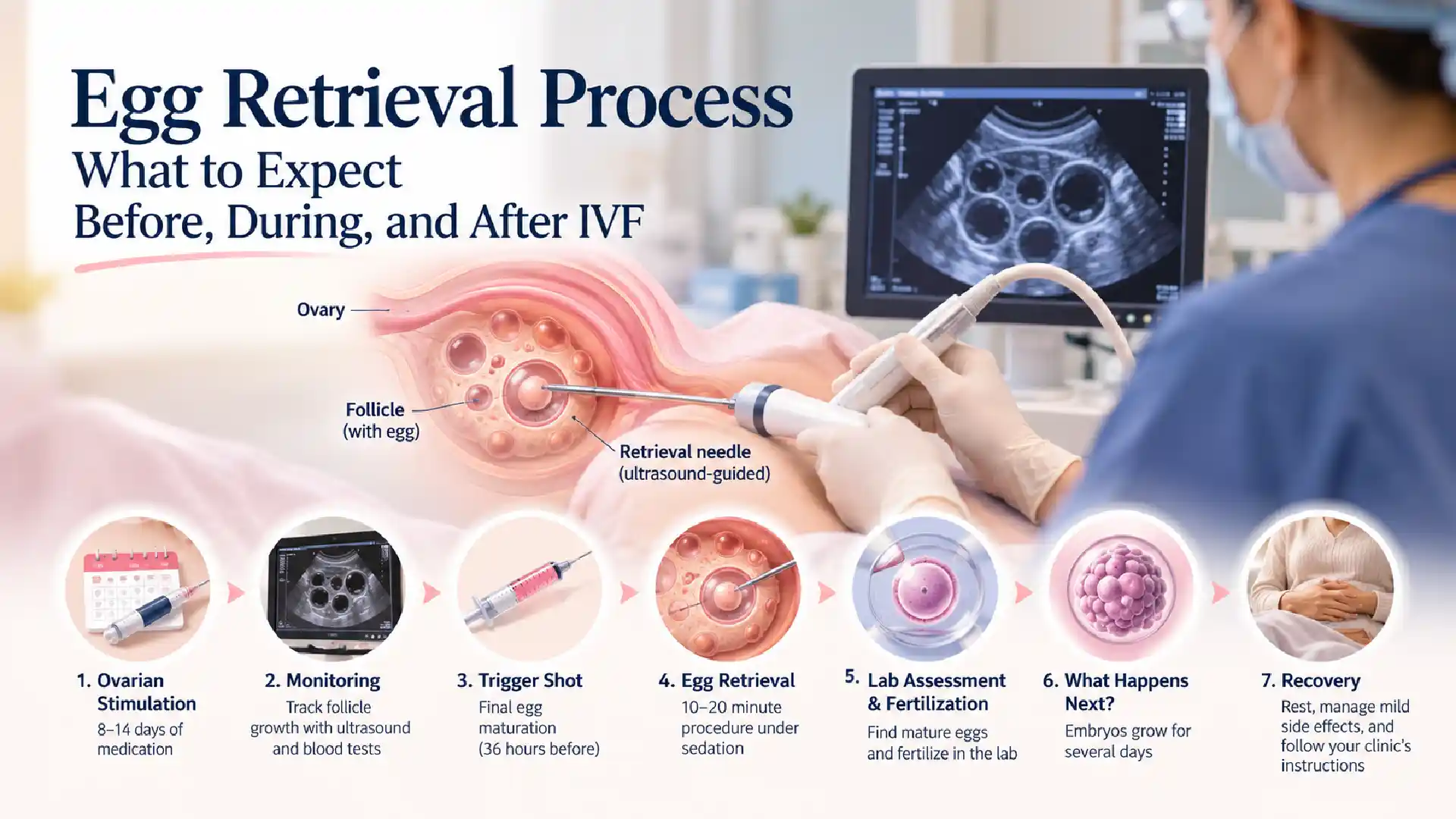
Table of contents31 sections
What Is the Egg Retrieval Process in IVF?
Egg retrieval, also called oocyte retrieval, oocyte pick-up (OPU), or egg collection, is a procedure used to remove eggs from ovarian follicles. It is a standard part of IVF and may also be performed for fertility preservation, egg donation, or as one step in the surrogacy process.
During a natural menstrual cycle, usually one egg reaches maturity and is released during ovulation. In an IVF cycle, fertility medications stimulate the ovaries to develop multiple follicles so that several eggs may be collected during one procedure.
It is important to understand that a follicle is not the same as an egg. A follicle is a fluid-filled structure in the ovary that usually contains an egg, but not every follicle will yield a retrievable egg.
Egg Retrieval Process: Step-by-Step
The treatment involves several stages, beginning with ovarian stimulation and ending with the laboratory assessment of the collected eggs.
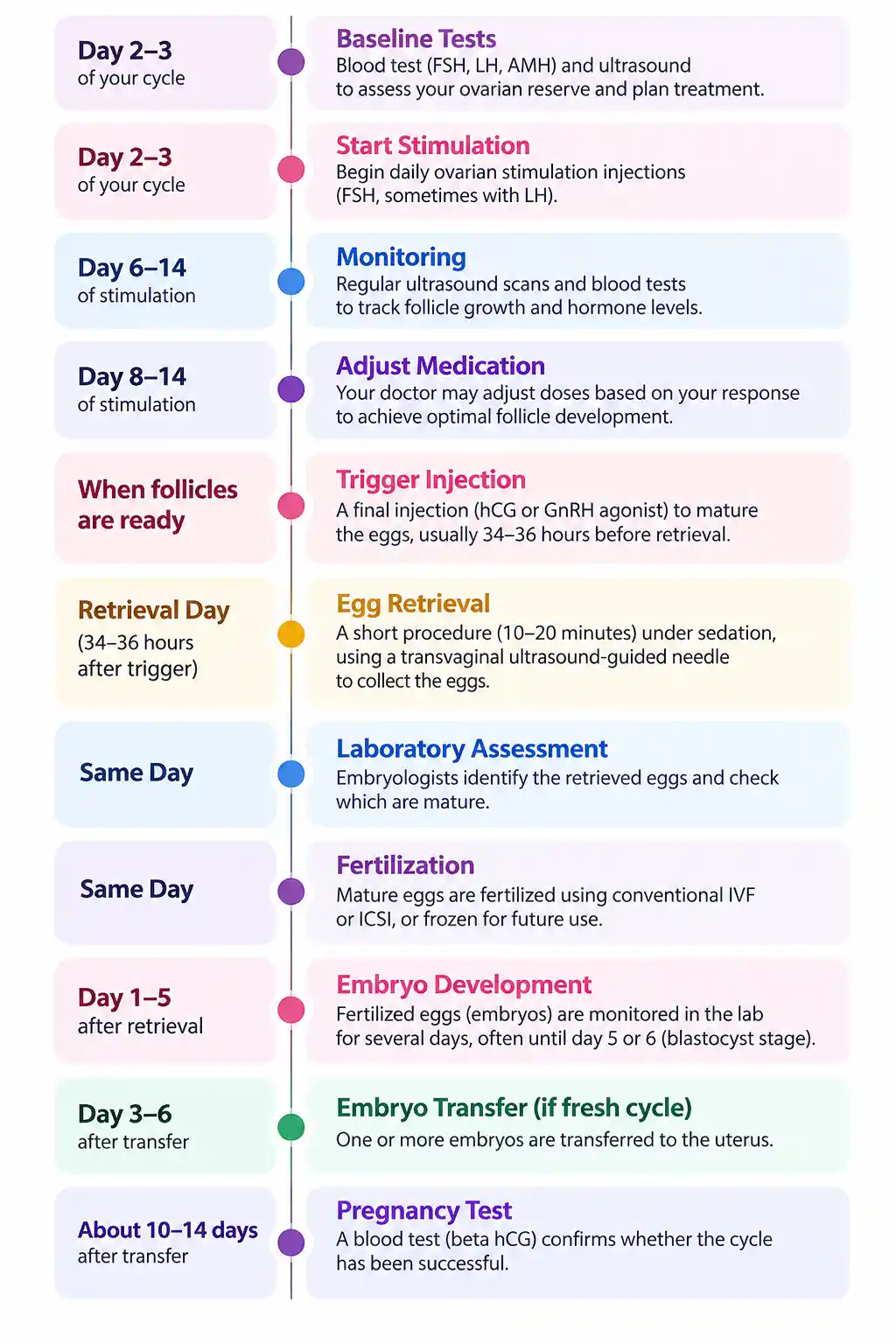
| Stage | Approximate Timing | What Happens |
|---|---|---|
| Ovarian stimulation | 8–14 days | Hormone injections encourage multiple follicles to develop. |
| Follicle monitoring | During stimulation | Ultrasounds and sometimes blood tests track follicle growth. |
| Trigger injection | Usually 34–36 hours before retrieval | Final egg maturation is triggered. |
| Egg retrieval | Usually 10–20 minutes | Eggs and follicular fluid are collected using a guided needle. |
| Laboratory assessment | Same day and following day | Embryologists identify the eggs and assess maturity. |
| Fertilization | Usually the day of retrieval | Mature eggs are inseminated or fertilized using ICSI. |
The schedule varies according to ovarian response, medication protocol, and the clinic's treatment plan, so understanding these differences can be helpful when you choose a fertility clinic.
1. Ovarian Stimulation Before Egg Retrieval
The first stage involves fertility medications, usually hormone injections, that encourage the ovaries to develop multiple follicles instead of the single dominant follicle typically produced in a natural cycle.
Stimulation commonly lasts around 8–14 days, although some patients need more or less time. The medication protocol and dosage are individualised according to factors such as age, ovarian reserve, previous treatment response, and the risk of ovarian hyperstimulation syndrome (OHSS), which is why some patients also explore ways to raise amh levels before treatment.
2. Follicle Monitoring
During stimulation, the fertility team monitors follicle development using transvaginal ultrasound. Blood tests, including estradiol measurements, may also be used to assess the ovarian response.
The ultrasound shows the number and size of visible follicles, helping the doctor decide when the eggs are likely to be ready for retrieval. However, the follicle count is only an estimate; it cannot predict the exact number of eggs that will be collected.
3. The Trigger Shot Before Egg Retrieval
When the follicles are considered ready, the doctor prescribes a trigger shot to support the final maturation of the eggs.
Depending on the protocol, the trigger may contain hCG, a GnRH agonist, or a combination. The timing is particularly important because retrieval is commonly scheduled approximately 34–36 hours after the trigger.
Follow the clinic's exact instructions. Taking the injection too early, too late, or at the wrong time may affect egg maturity and the retrieval schedule.
4. The Egg Retrieval Procedure
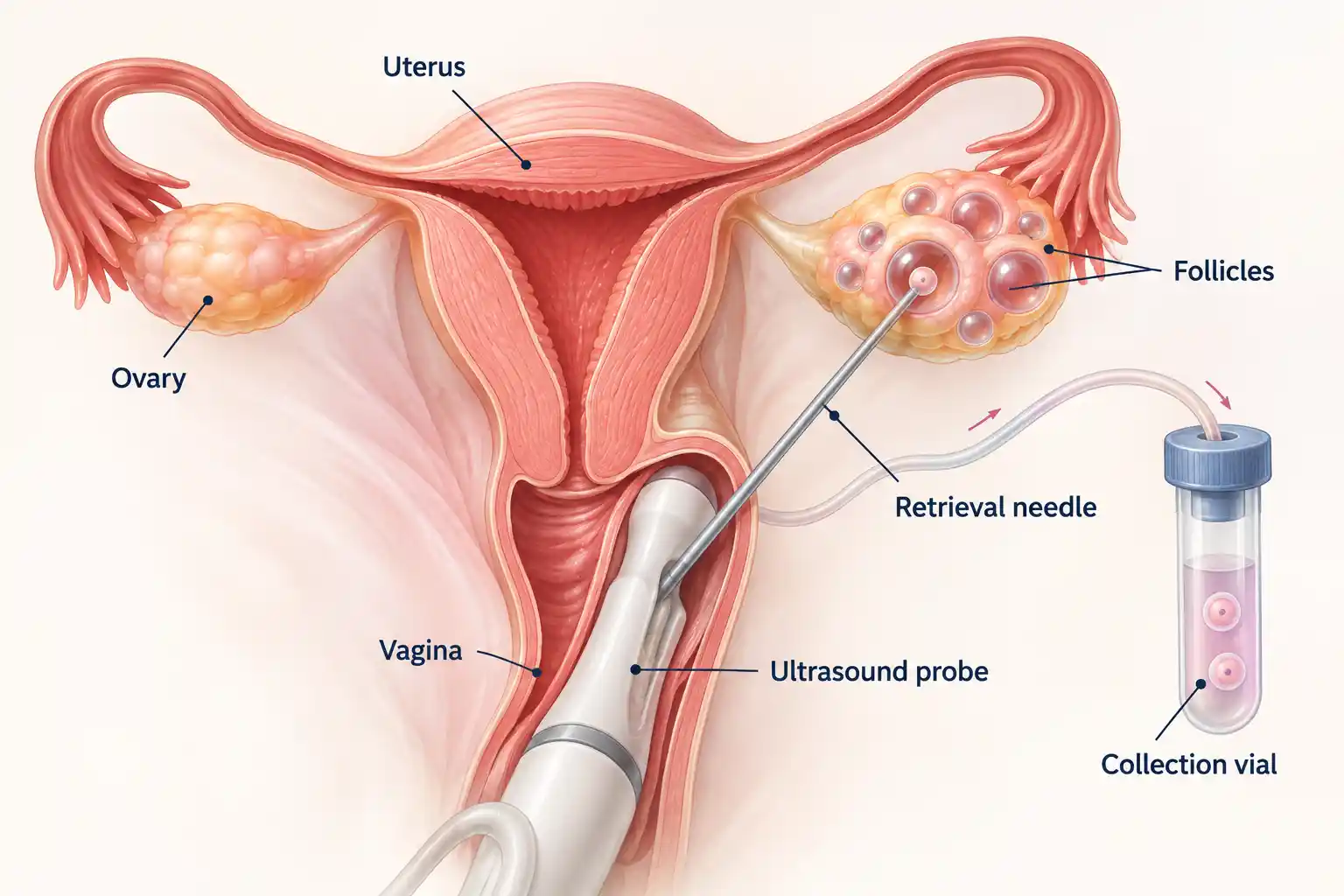
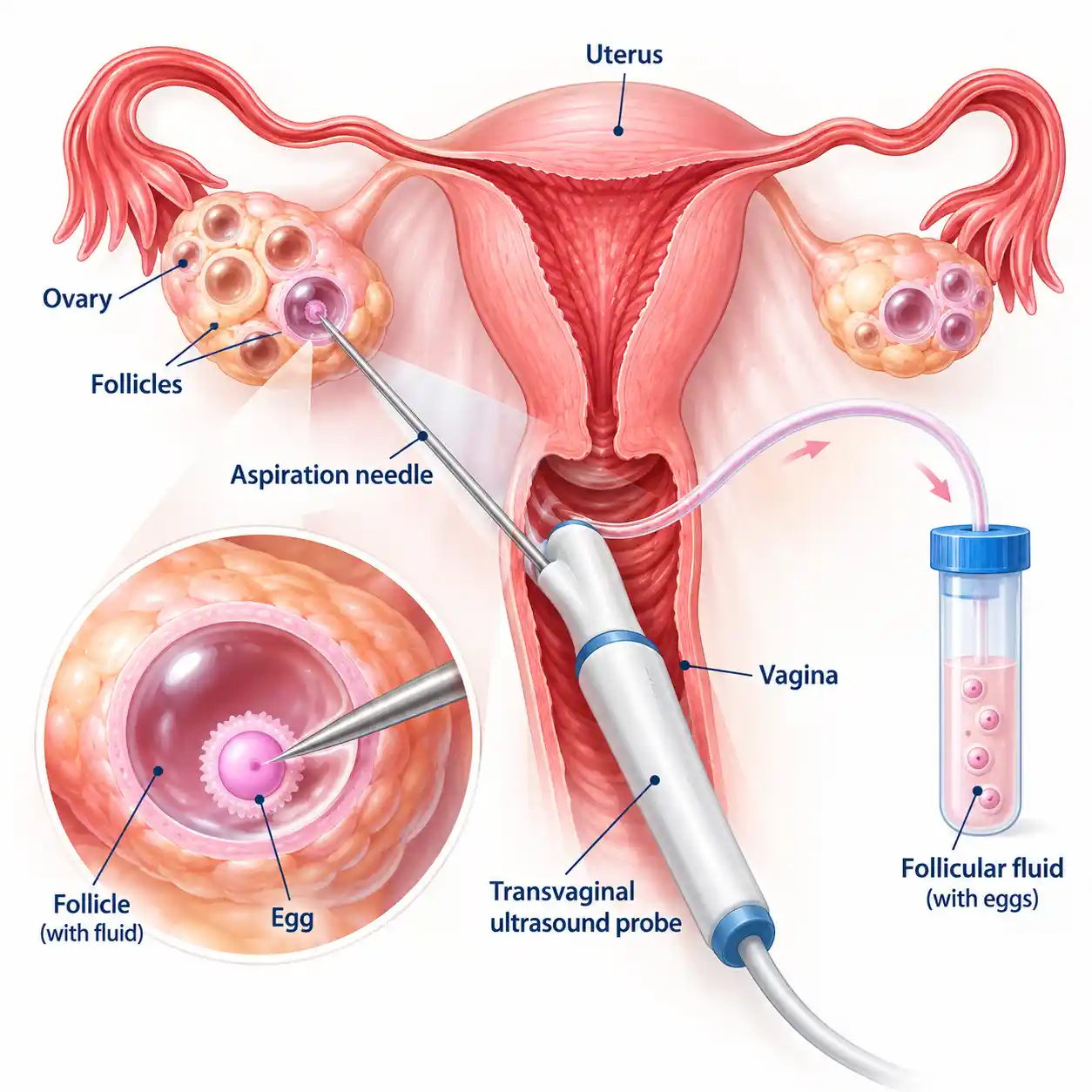
The egg retrieval procedure is usually performed through the vagina under transvaginal ultrasound guidance. It does not normally require abdominal incisions.
After sedation or anesthesia is administered, the doctor uses an ultrasound probe to visualise the ovaries. A thin aspiration needle passes through the vaginal wall and into the ovarian follicles. The follicular fluid is gently aspirated and collected in laboratory tubes.
The embryology team then examines the fluid under a microscope to locate and identify the eggs.
The procedure itself commonly takes around 10–20 minutes, although the duration may vary with the number of follicles and their accessibility.
5. Laboratory Assessment and Fertilization
After collection, embryologists assess the retrieved eggs and determine which are mature enough for fertilization.
Depending on the treatment plan, mature eggs may be:
Fertilized using conventional IVF, where sperm and eggs are placed together in a laboratory dish.
Fertilized using intracytoplasmic sperm injection (ICSI), where a single sperm is injected directly into an egg.
Frozen for future use if the cycle is intended for egg freezing.
The following day, the laboratory checks how many eggs have successfully fertilized. Embryos may then be monitored for several days, often until day 5 or 6, when some reach the blastocyst stage; after transfer, patients may also look for information about day 3 after embryo transfer symptoms.
What Happens on Egg Retrieval Day?
Knowing the sequence of events can make the procedure feel less unfamiliar. Although clinic routines differ, the day usually follows this pattern:
| Step | What to Expect |
|---|---|
| Arrival | Check in at the clinic at the scheduled time. |
| Preparation | Nursing staff review your information and prepare you for the procedure. |
| Anesthesia | The anesthesiologist administers the planned sedation or anesthesia. |
| Egg collection | The doctor collects follicular fluid under ultrasound guidance. |
| Recovery | You rest while the team monitors you as the medication wears off. |
| Discharge | You receive instructions and leave with a responsible adult if required. |
Most patients go home on the same day. Because sedation or anesthesia can affect alertness and coordination, you should not drive yourself home or make important decisions for the period specified by your clinic.
Is Egg Retrieval Painful?
Most patients do not feel pain during the procedure because sedation or anesthesia is used. The type of anesthesia varies between clinics and individual medical circumstances.
After waking up, you may experience:
Mild to moderate abdominal cramping.
Pelvic pressure or bloating.
Light vaginal spotting.
Tiredness, dizziness, or temporary nausea.
These symptoms are often temporary, but the level of discomfort varies. Some patients feel well enough to resume light activities the next day, while others need several days to recover.
How to Prepare for Egg Retrieval
Your fertility clinic will provide specific instructions based on your medication and anesthesia plan. General preparation may include:
Check your medication schedule: Confirm the dose and timing of every injection, especially the trigger shot.
Follow fasting instructions: Do not eat or drink during the period specified by your anesthesia team.
Arrange transportation: Make sure a responsible adult can accompany you home if sedation or anesthesia is used.
Wear comfortable clothing: Choose loose-fitting clothes that are easy to change.
Review your medications: Tell your doctor about prescription medicines, supplements, allergies, and existing health conditions.
Keep your schedule flexible: Avoid arranging strenuous activities or important commitments immediately after retrieval.
Do not change or stop prescribed medication without instructions from your medical team.
Recovery After Egg Retrieval
Recovery after egg retrieval is usually straightforward, but it is not identical for everyone. Mild cramping, bloating, pelvic tenderness, and light spotting can occur during the first few days.
Most patients are advised to rest for the remainder of retrieval day. Gentle walking may be appropriate, but strenuous exercise, heavy lifting, and activities that put pressure on the ovaries should be avoided until the clinic says they are safe.
How Long Does Recovery Take?
| Time After Retrieval | What You May Experience |
|---|---|
| First 24 hours | Fatigue, mild cramping, bloating, or spotting |
| Days 2–3 | Gradual improvement, although pelvic discomfort may remain |
| Days 4–7 | Many patients feel closer to their usual routine |
| Following days | Recovery continues; timing depends on symptoms and ovarian response |
Some patients recover within a day or two, while others need longer. A higher ovarian response or a large number of collected eggs may be associated with more pronounced symptoms, but this is not a reliable rule for every patient.
What Can Help After Egg Retrieval?
Rest and avoid strenuous activity as instructed.
Drink fluids regularly, following your clinic's advice.
Eat balanced meals and avoid foods that worsen bloating or constipation.
Use only pain relief approved by your fertility team.
Ask your clinic before taking laxatives, supplements, or other medications.
Follow the clinic's instructions about sex, exercise, and when to resume normal activities.
There is no single recovery routine that suits everyone. Your symptoms and medical history should guide your care.
Possible Side Effects and Risks of Egg Retrieval
Egg retrieval is generally considered a safe procedure, but complications can occur. Common temporary effects include abdominal discomfort, bloating, mild spotting, and nausea after anesthesia.
Less common complications include bleeding, infection, injury to nearby structures, and complications related to anesthesia.
One important risk associated with ovarian stimulation is ovarian hyperstimulation syndrome (OHSS). This occurs when the ovaries respond excessively to fertility medication and may cause enlarged ovaries and fluid accumulation in the abdomen.
Contact your fertility clinic promptly if you experience worsening abdominal pain or swelling, persistent vomiting, difficulty passing urine, or symptoms that concern you. Seek urgent medical attention for shortness of breath, chest pain, fainting, or severe abdominal pain.
Patients with PCOS, a high ovarian response, or a previous history of OHSS may need particular attention to risk assessment and prevention.
What Happens to the Eggs After Retrieval?
One of the most important things to understand is that the number of eggs collected is not necessarily the number of embryos that will develop.
The laboratory assesses the eggs and reports how many are mature. Mature eggs may then be fertilized, and the resulting embryos are monitored as they develop.
| IVF Stage | What the Number Represents |
|---|---|
| Follicles | Fluid-filled structures seen during ultrasound |
| Retrieved eggs | Eggs identified after follicular aspiration |
| Mature eggs | Eggs that have reached the appropriate stage for fertilization |
| Fertilized eggs | Eggs showing evidence of normal fertilization |
| Blastocysts | Embryos that develop to the blastocyst stage, usually on day 5 or 6 |
| Tested embryos | Embryos for which genetic testing was performed, if indicated |
For example, a patient may have 12 eggs retrieved, 8 mature eggs, 7 fertilized eggs, and 3 blastocysts. This is only an illustrative example, not an expected outcome or a universal success-rate formula.
It is normal for the numbers to decrease at each stage. Age, egg and sperm quality, ovarian response, laboratory conditions, and other factors influence embryo development and can also affect ivf success rates.
How Do Embryos Develop in the Days After Retrieval?
After fertilization, embryos are checked for normal development: the fertilization result is usually assessed on day 1, cell division is monitored around day 3, and some embryos reach the blastocyst stage on days 5–6. Not every fertilized egg reaches this stage.
What Are the Possible Steps After Egg Collection?
If you are freezing eggs, suitable mature eggs are usually frozen for future use. In an IVF cycle, embryos may be transferred in the same cycle if the medical team considers it appropriate, or frozen for a later transfer. The choice depends on embryo development, hormone levels, uterine readiness, and clinical factors.
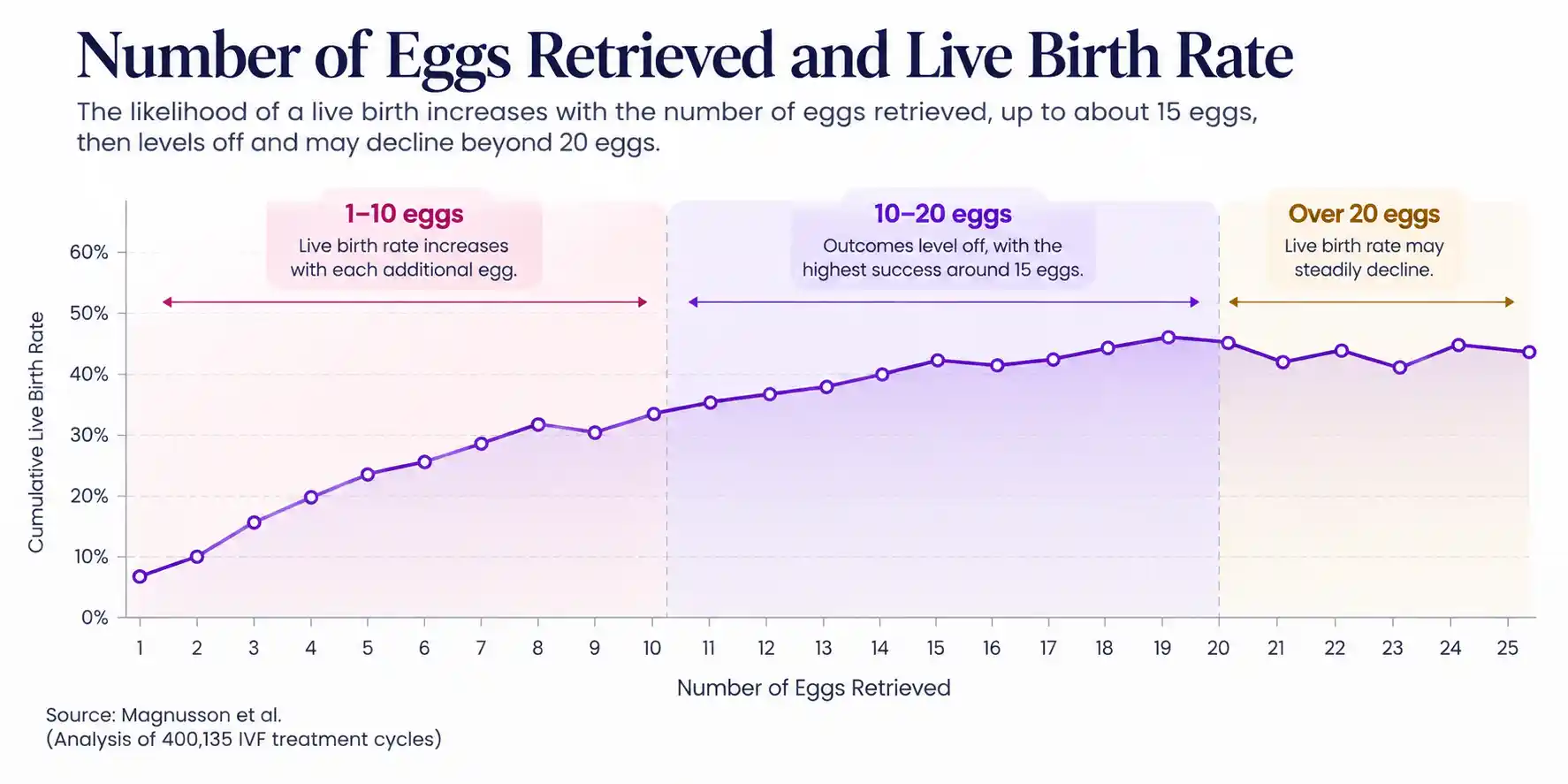
Does Retrieving More Eggs Always Mean a Better IVF Outcome?
Not necessarily. A higher egg count can provide more opportunities for fertilization and embryo development, but it does not guarantee pregnancy or live birth. The benefit may level off, and egg maturity, embryo quality, age, and individual circumstances remain important.
Why Don't All Follicles Produce Retrieved Eggs?
Seeing several follicles on an ultrasound does not guarantee that the same number of eggs will be collected. Some follicles may not contain a retrievable egg, some eggs may be immature, and some follicles may be difficult to access safely during the procedure.
The timing of the trigger injection, follicle development, ovarian response, and the accessibility of the ovaries can all affect the final result.
This is why doctors use ultrasound and, when appropriate, blood tests to estimate the likely response rather than promising an exact number of eggs.
What Do Patients Commonly Wish They Had Known Before Egg Retrieval?
Experiences shared in IVF support communities show that the physical procedure is not always the most difficult part of the cycle. Many patients describe the waiting for laboratory updates and the uncertainty around embryo development as particularly stressful.
Several practical themes appear repeatedly:
The final egg count may differ from the follicle count: Ultrasound estimates do not guarantee how many eggs will be collected.
Not every retrieved egg will be mature: Maturity is assessed separately after collection.
Fertilization does not guarantee blastocyst development: Some embryos stop developing before day 5 or 6.
Recovery can take longer than expected: Some people feel better the next day, while others experience bloating, constipation, or soreness for several days.
The schedule can change: Stimulation response and monitoring results may affect the retrieval date.
These are personal experiences, not clinical predictions. They are useful reminders to prepare for different possible outcomes and ask the fertility team what each laboratory update means.
Frequently Asked Questions About the Egg Retrieval Process
1. How long does the egg retrieval process take?
Ovarian stimulation commonly takes around 8–14 days. The retrieval procedure itself often takes approximately 10–20 minutes, followed by a recovery period at the clinic. The full IVF cycle continues after retrieval if fertilization and embryo transfer are planned.
2. How many eggs are usually retrieved during IVF?
There is no single number that applies to every patient. Age, ovarian reserve, medication response, and the number of developing follicles all influence the result. The exact number is known only after retrieval.
3. Is egg retrieval performed under general anesthesia?
Many clinics use intravenous sedation or anesthesia so patients remain comfortable during the procedure. The exact approach varies by clinic, patient health, and anesthesiologist assessment.
4. How long after the trigger shot is egg retrieval performed?
Retrieval is commonly scheduled approximately 34–36 hours after the trigger injection. The exact interval depends on the medication protocol and the clinic's instructions.
5. Can egg retrieval fail to collect any eggs?
Yes. In some cycles, no eggs may be collected even when follicles were visible on ultrasound. This can happen for different reasons, including follicle or egg maturity issues, and requires review by the fertility specialist.
6. How many eggs fertilize after retrieval?
The number depends on how many eggs are mature, sperm quality, and whether conventional IVF or ICSI is used. Not every retrieved egg will be mature or fertilize successfully.
7. Can I return to work the day after egg retrieval?
Some patients can return to light work the next day, while others need additional rest. Your recovery, job demands, symptoms, and clinic instructions should determine when you return.
8. When should I be concerned about pain after egg retrieval?
Mild cramping and bloating can be expected. Worsening pain, increasing abdominal swelling, persistent vomiting, reduced urination, chest pain, or breathing difficulty require prompt medical assessment.
9. Is egg retrieval the same as egg freezing?
The collection procedure can be similar, but the purpose differs. In IVF, retrieved eggs are usually fertilized to create embryos. In egg freezing, suitable mature eggs are frozen for potential future use.
Final Thoughts on the Egg Retrieval Process
The egg retrieval process is a short but important part of IVF, involving ovarian stimulation, careful monitoring, a timed trigger injection, and ultrasound-guided egg collection. Understanding the difference between follicles, retrieved eggs, mature eggs, fertilized eggs, and blastocysts can help you interpret your results realistically. Every patient's response and recovery are different, so follow your fertility specialist's instructions and discuss any symptoms or concerns with your medical team.
Comments 0
Share a question or experience related to this article. Comments appear after review by our team.
No comments yet. You can start the conversation.