Frozen Embryo Transfer
Frozen embryo transfer (FET) is an IVF procedure in which a previously frozen embryo is warmed and transferred to the uterus during a later cycle. Learn how FET works, how natural and programmed cycles differ, when transfer is scheduled, and which factors can affect success.
 By Dr. Farah GhasemiGynecologist & Obstetrician · Subspecialist in Infertility & IVF
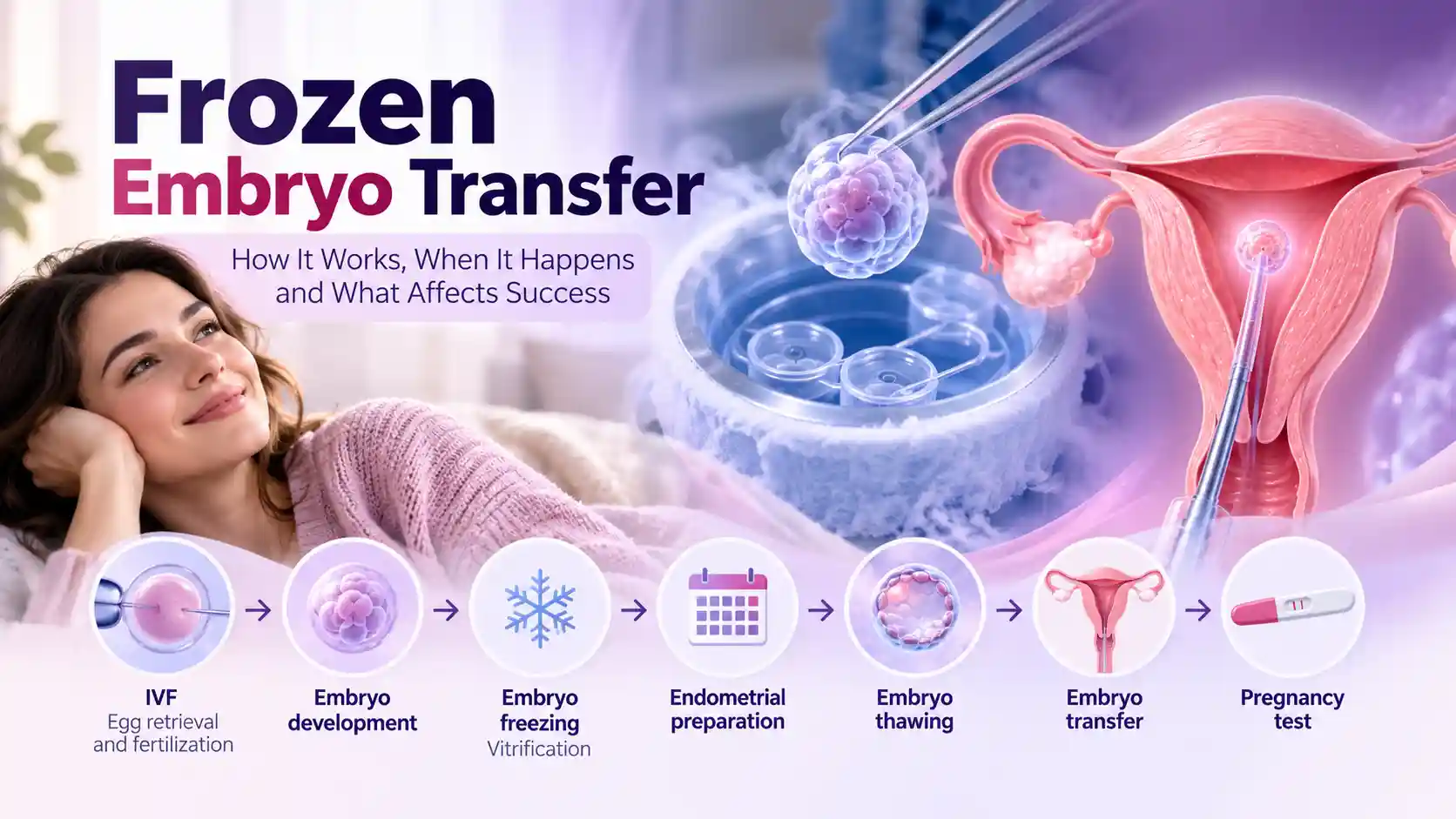
Table of contents55 sections
A frozen embryo transfer (FET) is a procedure in which an embryo that was created during an earlier in vitro fertilization (IVF) cycle is frozen, stored, warmed, and then transferred into the uterus in a later cycle.
Unlike a fresh embryo transfer, the embryo does not have to be transferred during the same cycle as egg retrieval. This gives the medical team more time to prepare the endometrium and choose the timing of transfer.
But there is an important point that is sometimes missed:
Frozen embryo transfer is not automatically better than fresh embryo transfer.
The best approach depends on factors such as ovarian response, ovulation, hormone levels, endometrial development, embryo stage, embryo quality, genetic testing, previous treatment, and the patient's overall medical situation.
At VitaLife, we use frozen embryo transfer when it is medically appropriate and when separating embryo creation from embryo transfer gives the patient a useful clinical or practical advantage.
What Is a Frozen Embryo Transfer?
A frozen embryo transfer, often shortened to FET, is the transfer of a previously cryopreserved embryo into the uterus.
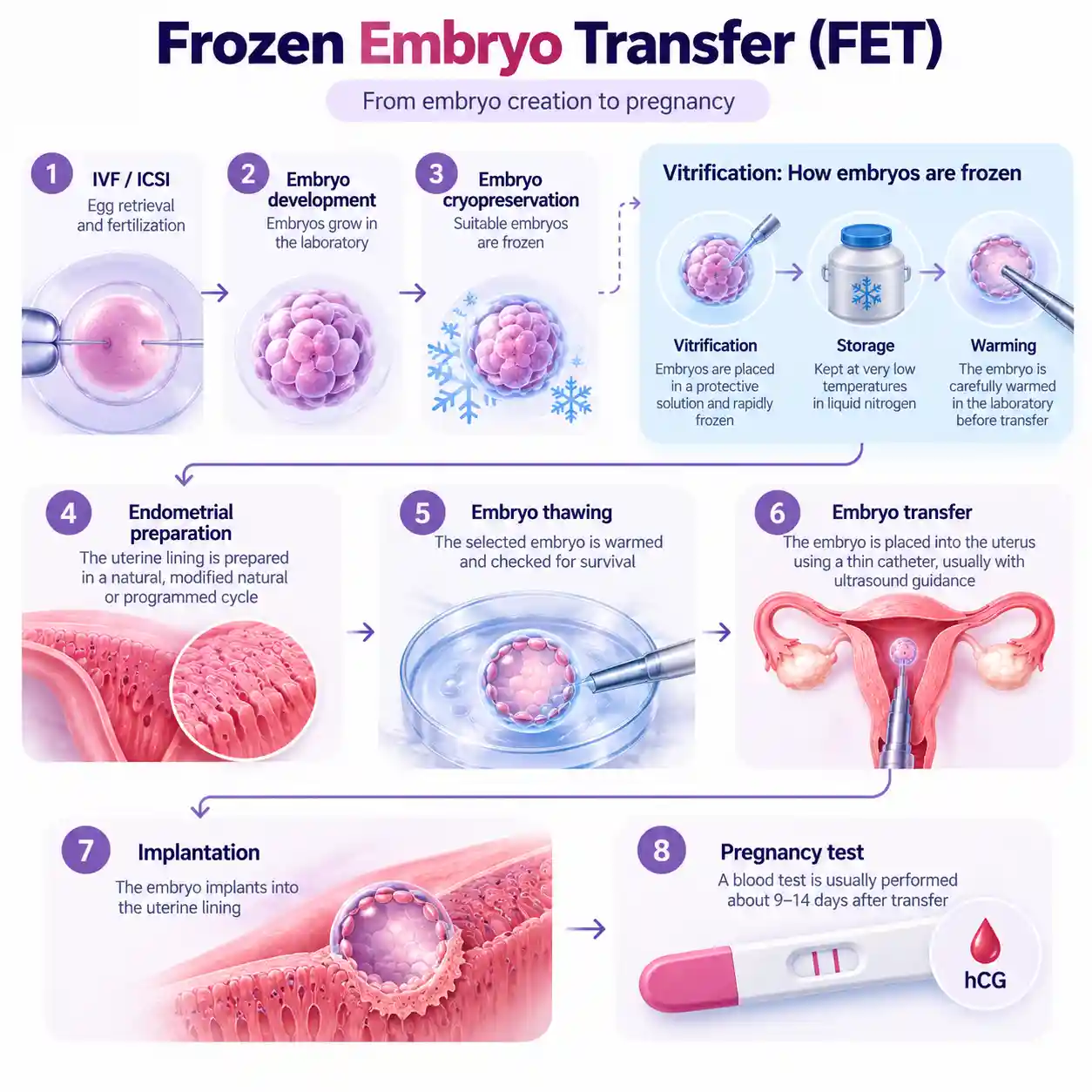
The embryo was usually created during an IVF cycle. After fertilization and embryo development, suitable embryos can be frozen using a modern cryopreservation method called vitrification.
Later, the embryo is warmed in the laboratory and, if it survives the warming process and is considered suitable for transfer, it is placed into the uterus through a thin catheter.
The basic process is:
IVF → fertilization → embryo development → embryo freezing → endometrial preparation → embryo warming → embryo transfer → pregnancy test
This means that egg retrieval and embryo transfer do not have to happen at the same time.
In simple terms:
| Fresh embryo transfer | Frozen embryo transfer |
|---|---|
| Embryo is created during the current IVF cycle | Embryo was created earlier |
| Embryo is not frozen before transfer | Embryo is cryopreserved |
| Transfer occurs shortly after egg retrieval | Transfer occurs in a later cycle |
| Endometrium develops during the stimulation cycle | Endometrium is prepared separately |
| Less flexibility in timing | More flexibility in timing |
How Does Frozen Embryo Transfer Work?
A typical FET cycle has several steps.
1. Decide which embryo will be transferred
The laboratory reviews the embryos that were created during IVF.
The embryo may be:
- a cleavage-stage embryo
- a day 5 blastocyst
- a day 6 blastocyst
- an embryo that was previously tested with PGT
The embryologist considers embryo development and morphology when determining which embryo is appropriate for transfer.
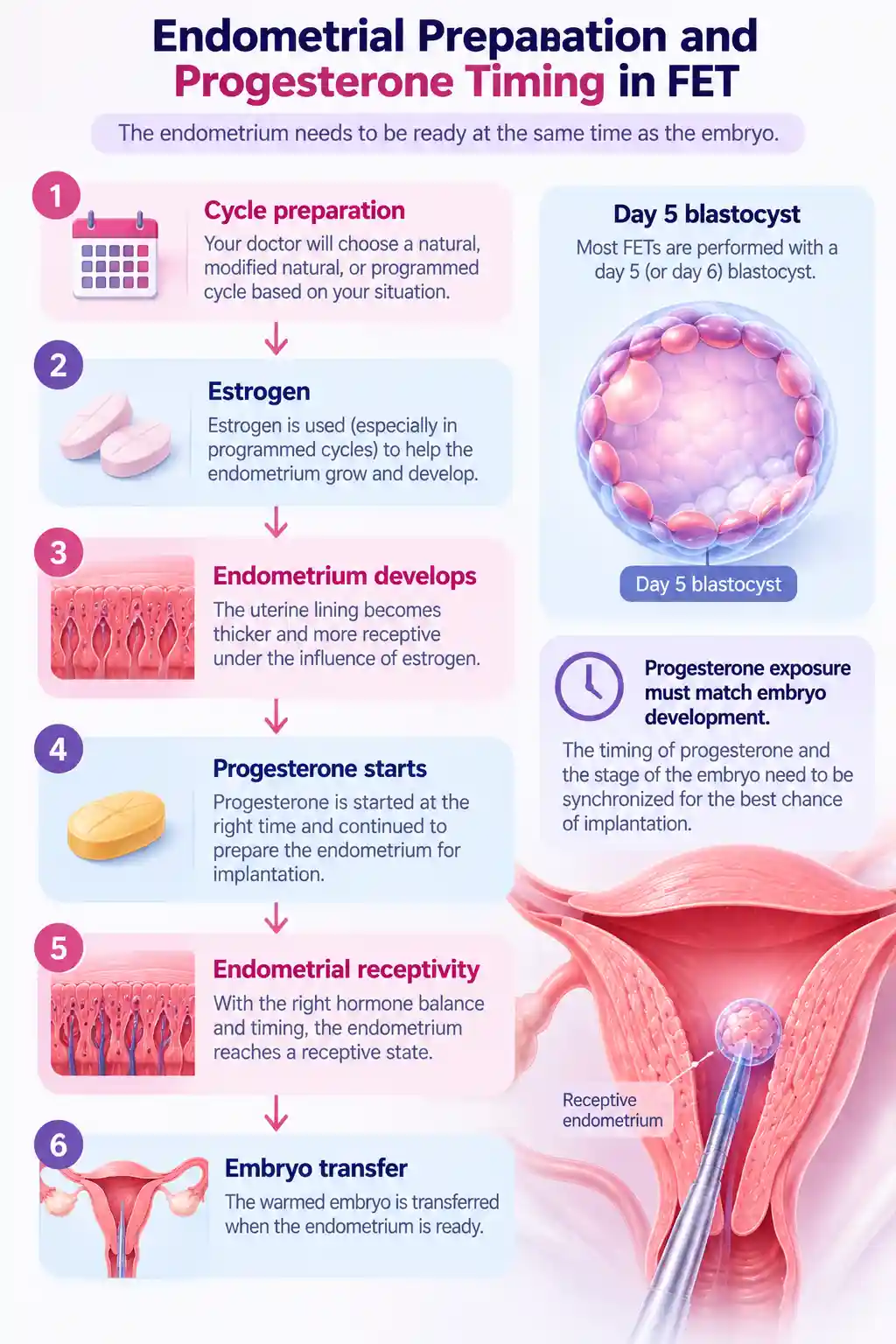
2. Prepare the endometrium
The uterus needs to be ready for implantation.
Depending on the patient, the clinic may use:
- a true natural cycle
- a modified natural cycle
- a programmed or hormone-replacement cycle
3. Time progesterone and the transfer
Timing is one of the most important parts of FET.
The embryo and endometrium need to be at the right developmental stage at the same time.
For a blastocyst, for example, the timing of progesterone exposure is coordinated with the day of transfer.
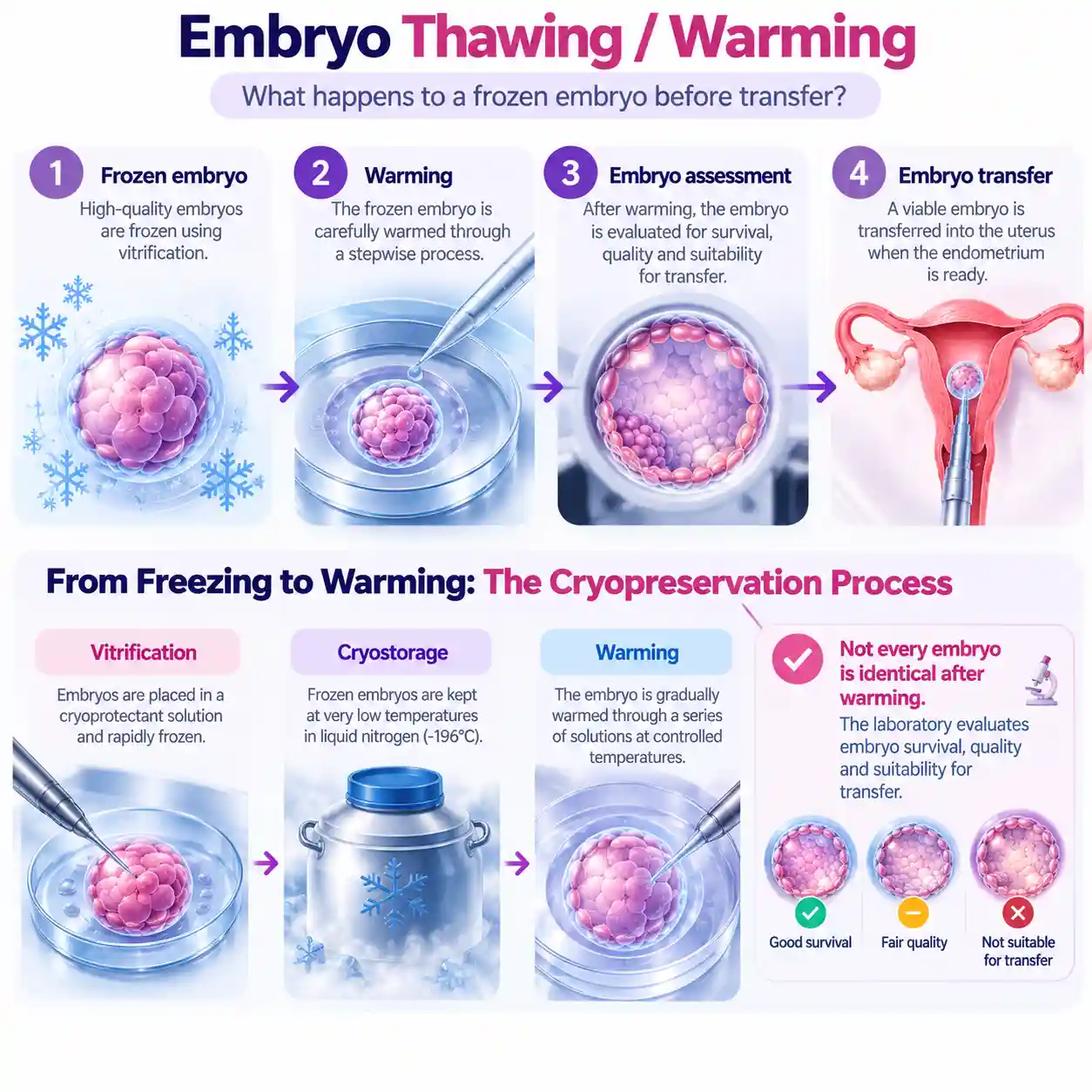
4. Warm the embryo
On the day of transfer, the frozen embryo is warmed in the laboratory.
Modern vitrification has made frozen embryo storage a routine part of IVF in many clinics. The laboratory checks the embryo after warming before proceeding with transfer.
5. Transfer the embryo
The embryo is loaded into a thin flexible catheter.
The catheter passes through the cervix and the embryo is placed inside the uterus, usually with ultrasound guidance.
The procedure itself is usually short.
6. Pregnancy testing
A blood pregnancy test is generally performed several days after transfer according to the clinic's protocol.
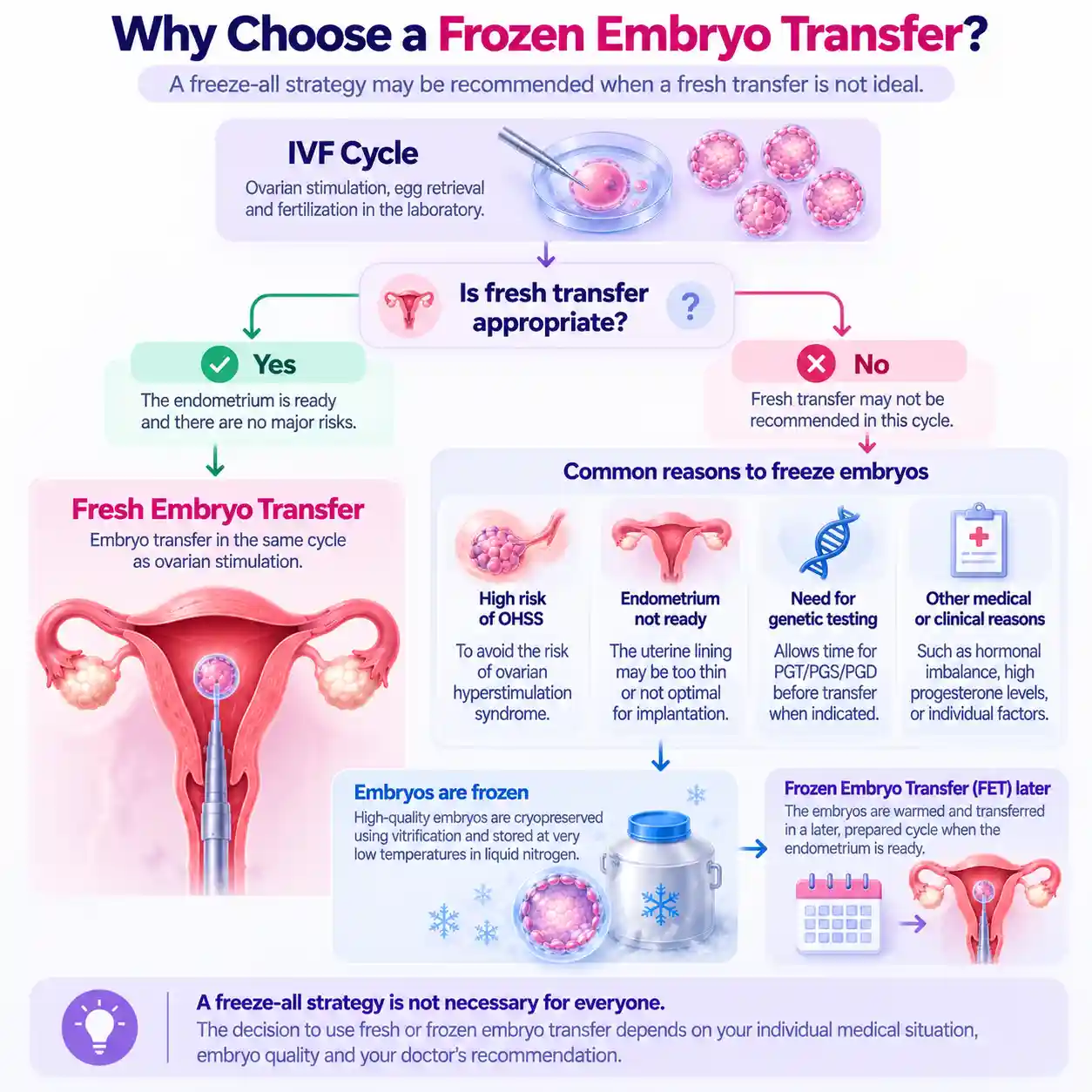
Why Are Embryos Frozen?
There are several reasons a clinic may choose to freeze embryos instead of performing a fresh transfer.
Common reasons include:
- the endometrium is not ready
- hormone levels are not suitable for fresh transfer
- there is a concern about ovarian hyperstimulation syndrome (OHSS)
- genetic testing is planned
- the patient needs to delay pregnancy
- the embryo is being preserved for future use
- the clinical team wants to separate egg retrieval from embryo transfer
- the patient is undergoing fertility preservation
A freeze-all strategy can also make the treatment easier to schedule for international patients because egg retrieval and embryo transfer can happen during separate visits. This is one reason VitaLife may use a frozen-transfer pathway when it is medically appropriate.
What Is Embryo Vitrification?
Vitrification is a rapid freezing method used to preserve embryos.
Older cryopreservation methods used slower cooling. Vitrification uses very rapid cooling with cryoprotective solutions to reduce the formation of damaging ice crystals.
The basic idea is:
Embryo → cryoprotective solution → rapid cooling → storage → warming → assessment → transfer
The embryo is stored at very low temperature until it is needed.
Modern vitrification has greatly improved the reliability of embryo cryopreservation compared with older slow-freezing methods.
However, the exact survival rate after warming can vary by:
- laboratory
- embryo stage
- embryo quality
- vitrification protocol
- warming protocol
- laboratory experience
For this reason, a clinic should provide its own laboratory survival data rather than using one universal percentage.
When Is Frozen Embryo Transfer Done?
One of the most common questions is:
When is frozen embryo transfer done?
There is no single day of the menstrual cycle that applies to everyone. The transfer date depends on the type of FET cycle and the developmental stage of the embryo.
For example:
- In a natural cycle, timing is based on ovulation.
- In a modified natural cycle, ovulation may be triggered with hCG.
- In a programmed cycle, estrogen and progesterone are used to prepare the endometrium and control timing.
This is why a phrase such as "frozen embryo transfer on day 22 of cycle" does not describe a universal FET schedule.
Day 22 may be appropriate for one patient and completely inappropriate for another.
The important date is not simply the calendar day.
It is the relationship between:
endometrial development + progesterone exposure + embryo age
Frozen Embryo Transfer Cycle: Natural vs Modified Natural vs Programmed
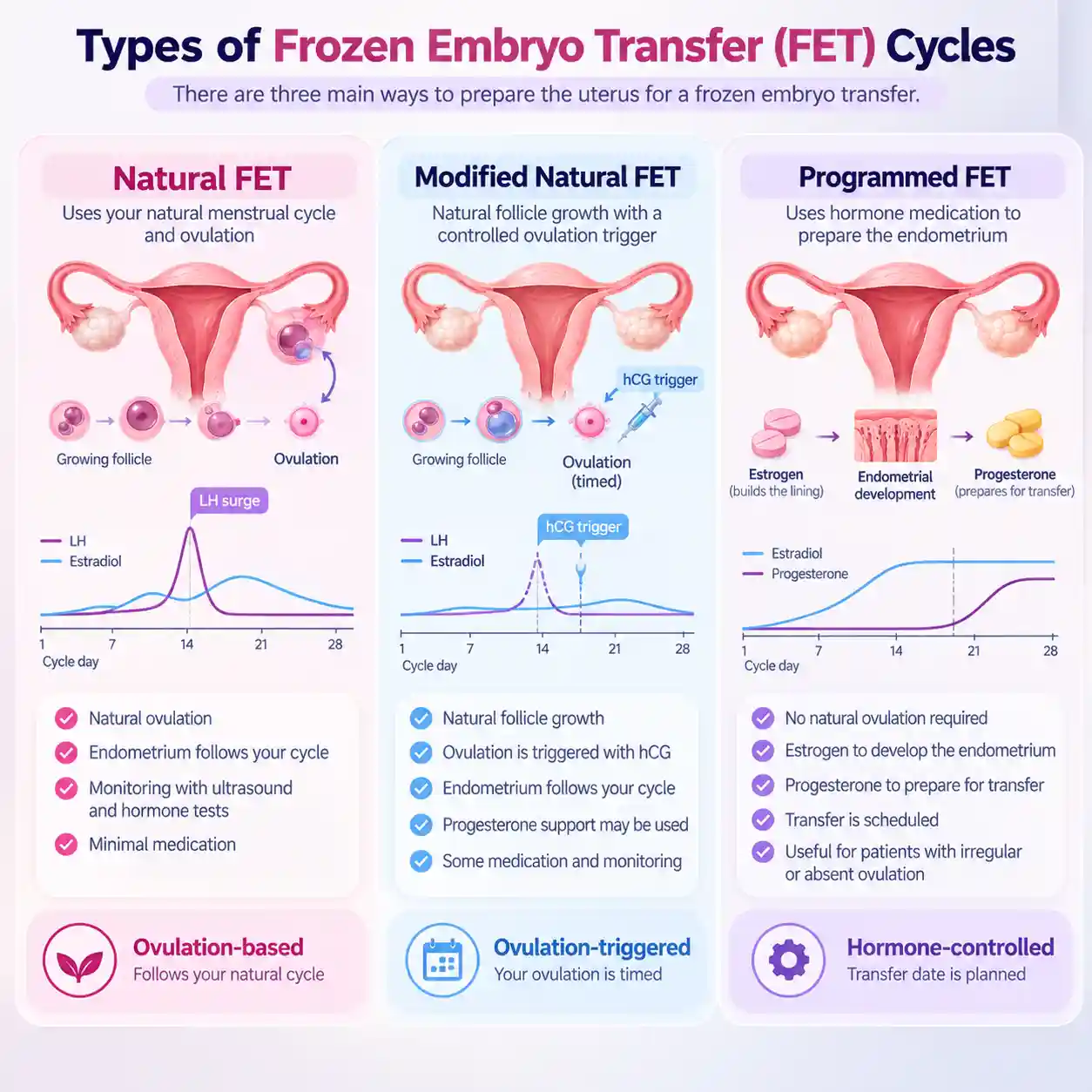
There are three common ways to prepare for FET.
| FET protocol | How it works | Main feature |
|---|---|---|
| True natural cycle | Uses the patient's own ovulation | Little or no cycle medication |
| Modified natural cycle | Tracks ovulation and may use hCG trigger | Gives more control over timing |
| Programmed cycle | Uses estrogen and progesterone | Does not depend on spontaneous ovulation |
The choice is not simply about which method is easier.
The patient's:
- ovulation pattern
- menstrual cycle
- ovarian function
- medical history
- previous IVF outcomes
- endometrial development
- risk factors
all matter.
Natural Frozen Embryo Transfer
In a natural FET cycle, the patient's own menstrual cycle is used.
The clinic monitors follicle development, hormone levels and ovulation.
Once ovulation is identified, the transfer is scheduled according to the embryo's developmental age.
A natural FET may involve:
- Menstrual period
- Follicle growth
- Ultrasound monitoring
- LH or ovulation monitoring
- Ovulation
- Progesterone exposure
- Embryo transfer
- Pregnancy test
This approach is generally considered when the patient has regular ovulatory cycles.
Modified Natural FET
A modified natural cycle is similar to a natural cycle, but the clinic has more control over ovulation timing.
For example, an hCG trigger may be used when the follicle is ready.
This can make the timing of ovulation and embryo transfer easier to plan.
This distinction has become particularly important because new 2026 evidence did not find that all natural cycles behave the same way.
A systematic review and meta-analysis of 11 randomized trials involving 9,955 women found:
- Natural-cycle preparation: 41.5% live birth
- Artificial-cycle preparation: 39.2% live birth
- Relative risk: 1.11
- Modified natural cycle showed a significant benefit.
- True natural cycle did not show a statistically significant difference from artificial preparation.
Natural FET is always better.
A more accurate conclusion is:
Recent randomized evidence suggests that natural-cycle preparation, particularly modified-natural FET, may have an advantage in some patients, but the result should not be treated as a universal rule.
Programmed or Hormone-Replacement FET
A programmed FET uses medication to prepare the endometrium. Estrogen is commonly used first to help the endometrium develop. Once the lining and other clinical factors are considered suitable, progesterone is started.
The embryo transfer is then scheduled according to the duration of progesterone exposure and the developmental age of the embryo.
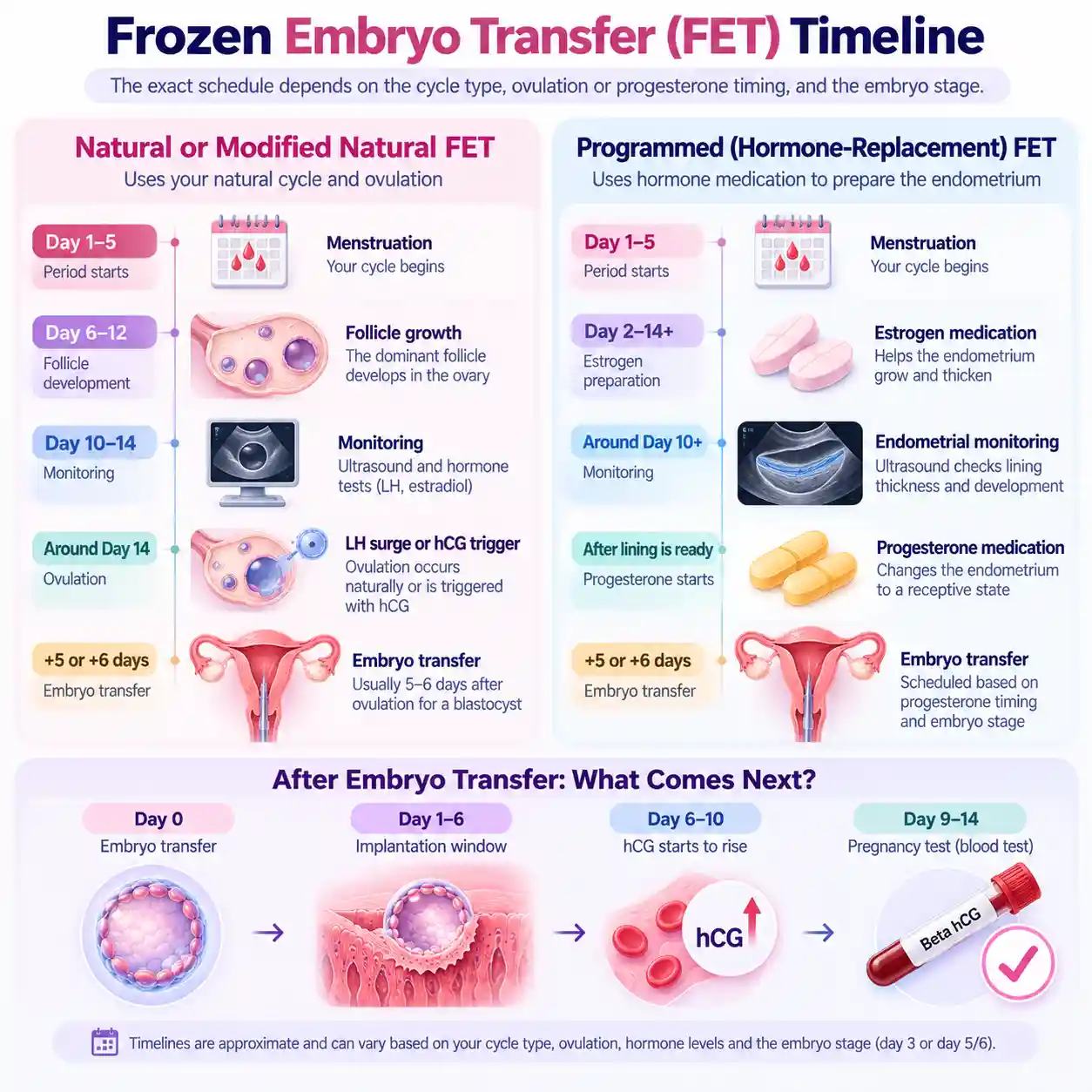
A simplified programmed FET timeline
Cycle preparation
↓
Estrogen
↓
Endometrial monitoring
↓
Progesterone starts
↓
Embryo-transfer date is calculated
↓
Embryo warming
↓
Frozen embryo transfer
↓
Pregnancy test
One advantage of a programmed cycle is that the clinic has greater control over the timing.
It may also be useful for patients who do not ovulate regularly.
Natural vs Programmed FET: What Does 2026 Evidence Show?
This is one of the most important new sections in the article.
A 2026 systematic review included 11 randomized controlled trials and 9,955 women.
Overall, natural-cycle preparation had a higher live-birth rate than artificial-cycle preparation:
| Outcome | Natural cycle | Artificial cycle |
|---|---|---|
| Live birth | 41.5% | 39.2% |
| Relative risk | 1.11 | Reference |
| Miscarriage | 13.4% | 17.5% |
The evidence was rated moderate quality.
But there is an important detail.
When the researchers separated natural cycles into:
- true natural cycles
- modified natural cycles
the significant difference was mainly seen with modified natural cycles.
True natural cycles did not show a statistically significant live-birth difference. PubMed
What does this mean for patients?
It means the question should not simply be:
"Is natural FET better?"
A better question is:
"Which endometrial preparation protocol fits my ovulation pattern and medical situation?"
That is a much more useful clinical question.
How Thick Should the Endometrium Be Before FET?
Endometrial thickness is often discussed before embryo transfer.
You may hear that the lining must be above a specific number, such as 7 or 8 mm.
The evidence is more complicated.
A large international study examined 30,676 single euploid frozen blastocyst transfers across 25 IVF centers in three countries.
The researchers found that live-birth rates were lower when the endometrium was below 7 mm in programmed cycles and modified-natural cycles. However, in true natural cycles, they did not find a clear thickness threshold below 7 mm that significantly affected live birth.
The study also found that endometrial thickness alone was not a strong predictor of live birth.
This is important because it means:
7 mm should not be treated as a magic number.
A clinic should consider the whole clinical picture rather than cancelling or proceeding with a cycle based only on one measurement.
Read More: what should i ask about lab success rates during a fertility clinic consultation?
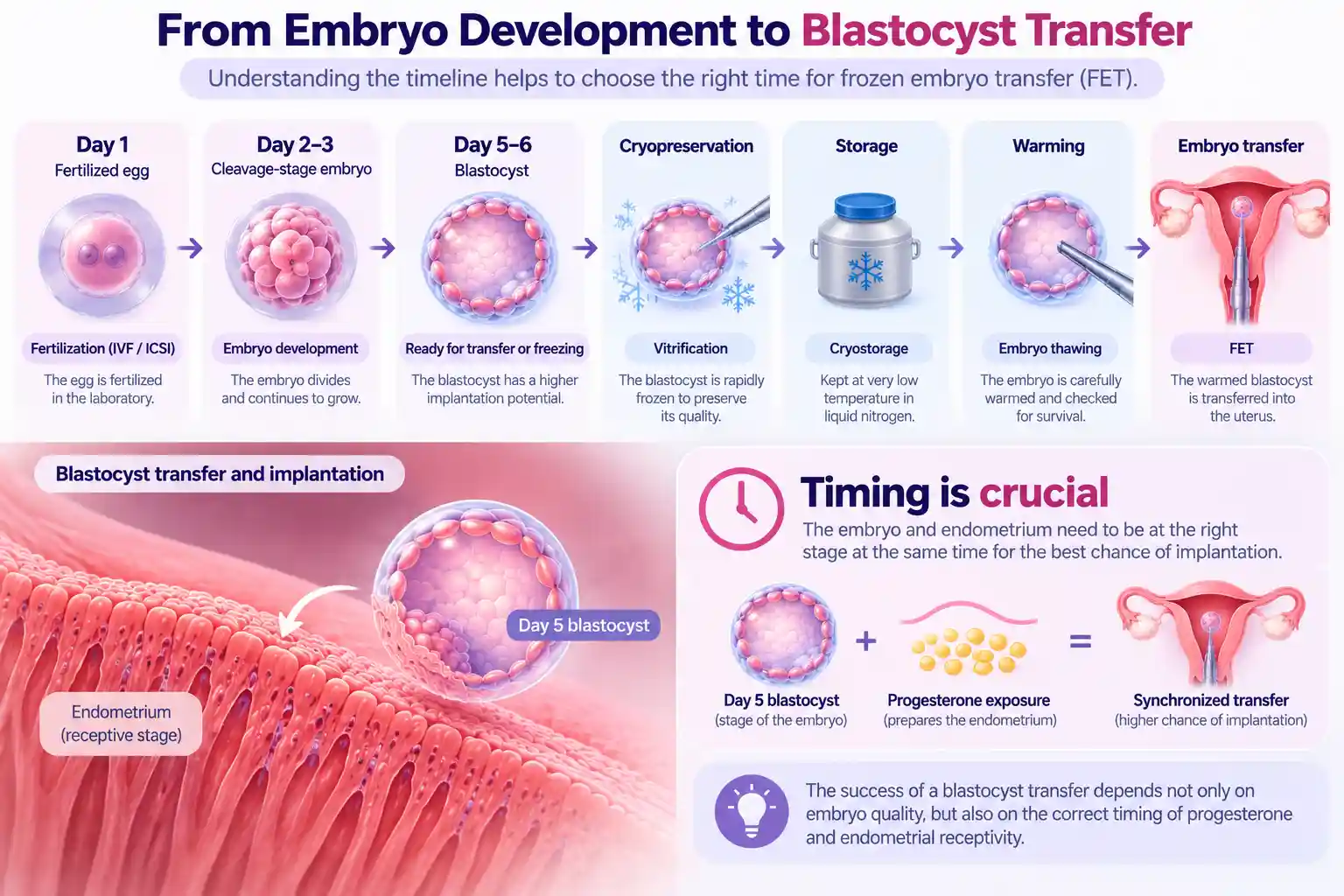
Does Frozen Embryo Transfer Have a Higher Success Rate Than Fresh Transfer?
This question does not have one answer for every patient.
Earlier studies suggested that frozen transfer could improve outcomes because the uterus may be prepared separately from ovarian stimulation.
However, more recent research shows that the answer changes depending on the patient group.
For example, a 2026 systematic review specifically examined low responders.
The review included:
- 1 randomized controlled trial
- 14 nonrandomized studies
- evidence from more than 4,400 screened records
In the randomized trial, FET was associated with lower:
- live birth
- clinical pregnancy
- cumulative live birth
compared with fresh transfer. The reported risk ratios were:
| Outcome | FET vs fresh transfer |
|---|---|
| Live birth | RR 0.79 |
| Clinical pregnancy | RR 0.83 |
| Cumulative live birth | RR 0.86 |
However, the nonrandomized studies did not show a clear difference, and the authors emphasized that more randomized research is needed.
Why is this important?
Because low responders are not the same population as all IVF patients.
The findings should not be used to say:
"Fresh transfer is better."
They also should not be used to say:
Instead, they show why the choice needs to consider ovarian response and the reason for using FET."Frozen transfer is better."
So, Which Is Better: Fresh or Frozen?
There is no universal winner.
A fresh transfer may make sense when:
- the endometrium is suitable
- hormone levels are acceptable
- ovarian response is appropriate
- there is no major OHSS concern
- there is no reason to delay transfer
- the embryo is suitable for transfer
A frozen transfer may make sense when:
- the endometrium needs more preparation
- hormone levels are not ideal
- there is concern about OHSS
- PGT is planned
- pregnancy needs to be delayed
- embryo transfer needs to be separated from egg retrieval
- the medical team believes another cycle provides better timing
The decision is therefore more like this:
| Clinical situation | Possible approach |
|---|---|
| Suitable stimulation cycle | Fresh or frozen |
| High OHSS risk | Frozen may be considered |
| PGT planned | Frozen transfer after testing |
| Endometrium not ready | Delay and freeze |
| Irregular ovulation | Programmed FET may be useful |
| Regular ovulation | Natural or modified-natural FET may be considered |
| Low ovarian response | Fresh vs frozen requires individual assessment |
| International treatment planning | FET can separate retrieval and transfer |
What Is the Benefit of Frozen Embryo Transfer?
The biggest benefit is not simply a higher IVF success rate.
It is flexibility.
FET allows the embryo transfer to occur separately from ovarian stimulation and egg retrieval.
This can provide several practical and medical advantages.
Potential benefits include:
- more control over transfer timing
- separate endometrial preparation
- avoiding fresh transfer when hormone levels are not suitable
- avoiding fresh transfer in patients at risk of OHSS
- time for PGT when indicated
- no need for another egg-retrieval procedure before each stored embryo transfer
- easier treatment planning for some international patients
- the ability to preserve embryos for future use
But these benefits do not mean every patient should freeze all embryos.
Freeze-All Does Not Mean "Freeze Everything Because Frozen Is Better"
This distinction is important.
A freeze-all strategy means embryos are cryopreserved and no fresh embryo is transferred in that treatment cycle.
The reason may be:
medical
or
laboratory/genetic
or
practical
or a combination of these.
The evidence does not support treating freeze-all as automatically superior for every IVF patient.
The 2026 low-responder review is a good example of why patient selection matters.
Can You Do PGT on a Frozen Embryo?
Yes, but the exact process depends on when the embryo was frozen and whether it was previously biopsied.
For embryos undergoing PGT, the usual sequence is:
Embryo develops → biopsy → embryo freezing → genetic testing → result → FET
PGT-A evaluates chromosome number.
PGT-M is used when testing for a specific known genetic condition.
The important point is that PGT is not the same as "making an embryo better."
It provides genetic information that may help with embryo selection in selected situations.
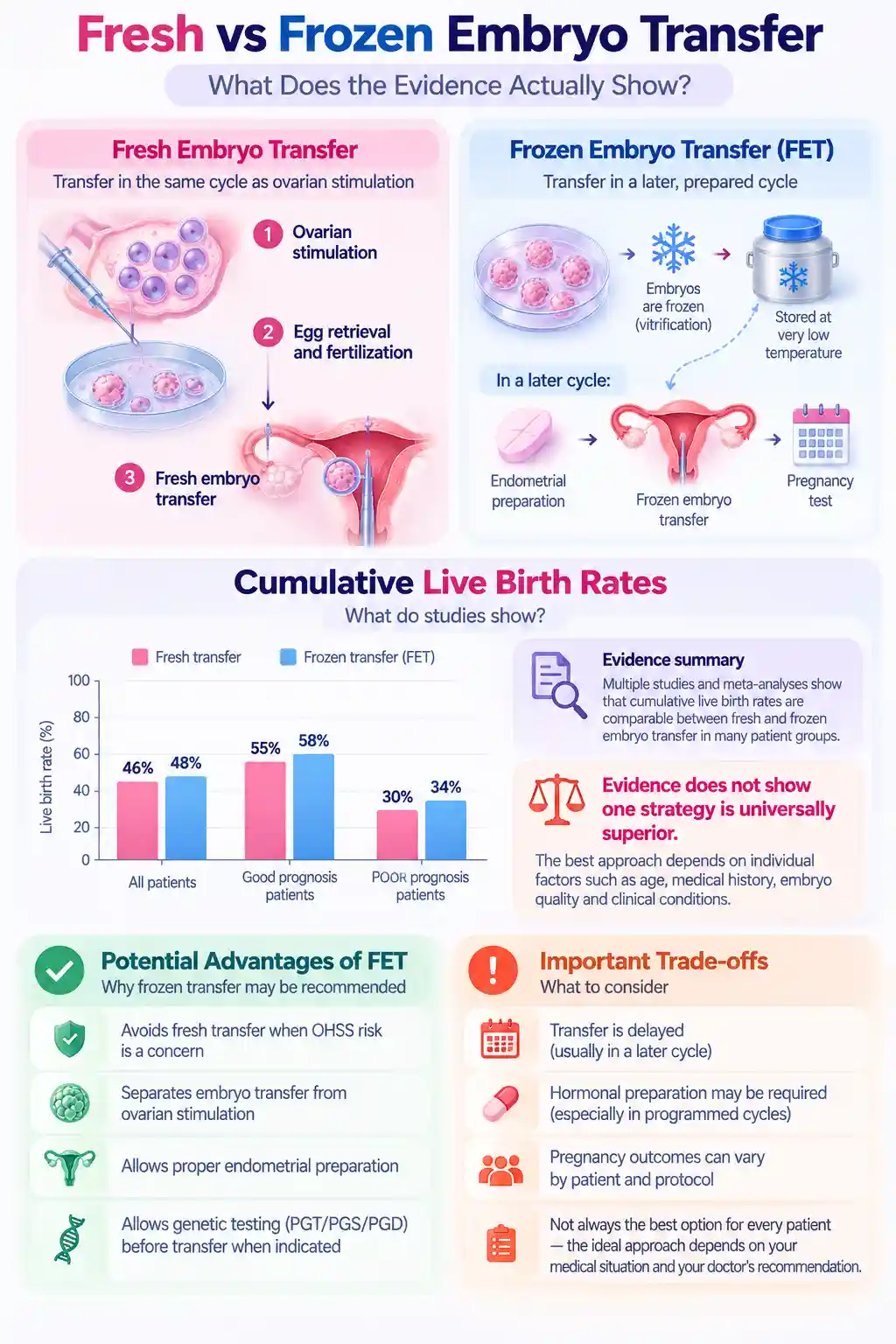
How Long Does a Frozen Embryo Transfer Cycle Take?
There is no single FET timeline.
A programmed cycle may take several weeks.
A natural cycle depends on when ovulation occurs.
A patient who already has embryos frozen may therefore have a transfer scheduled in the next menstrual cycle, while another patient may need more preparation first.
A simple example is:
| Stage | Approximate timing |
|---|---|
| Menstrual cycle begins | Day 1 |
| Endometrial preparation | Variable |
| Monitoring | During preparation |
| Ovulation or progesterone start | Protocol dependent |
| Embryo transfer | Timed to embryo age |
| Pregnancy blood test | Usually about 9–14 days later |
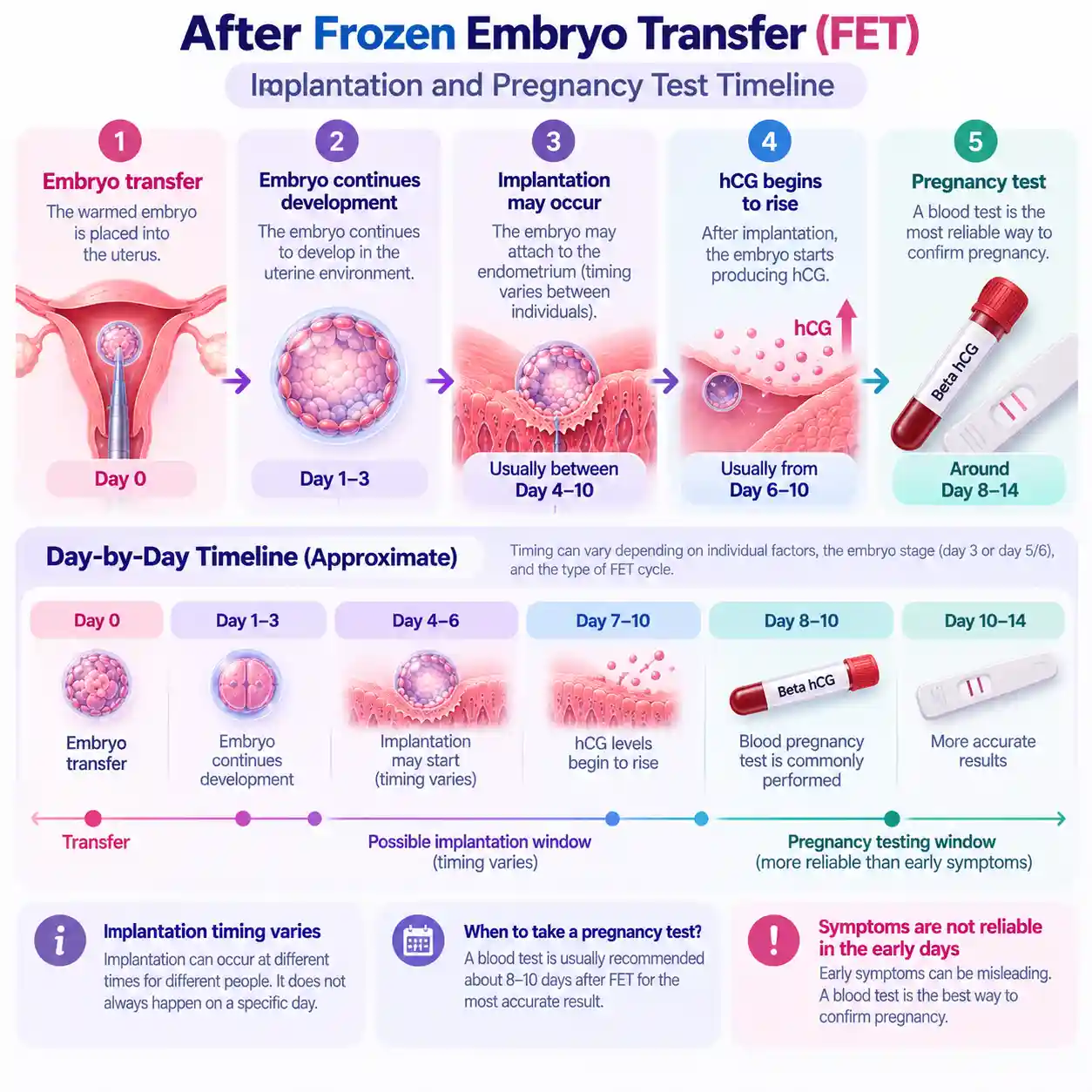
Frozen Embryo Transfer Day by Day
Patients often search for phrases such as:
- 4 days post frozen embryo transfer
- 5 days after frozen embryo transfer
- 6 days post frozen embryo transfer
- 7 days after frozen embryo transfer
- 8 days after frozen embryo transfer
- 9 days after frozen embryo transfer
- 10 days after frozen embryo transfer
The important point is that implantation does not happen at exactly the same hour in every pregnancy.
For a blastocyst transfer, a simplified timeline looks like this:
| Time after blastocyst transfer | What may be happening |
|---|---|
| Day 0 | Blastocyst is transferred |
| Day 1 | Embryo may continue hatching |
| Day 1–2 | Initial attachment may occur |
| Day 2–4 | Implantation may progress |
| Day 4–6 | hCG production can increase after implantation |
| Day 6–9 | Pregnancy tests become more informative |
| Around Day 9–14 | Blood pregnancy testing is commonly performed |
This is a general biological timeline, not a way to diagnose pregnancy from symptoms.
A person can have no symptoms and still become pregnant.
Another person can experience cramping, spotting or breast tenderness without being pregnant.
After a Frozen Embryo Transfer: What Happens?
After the embryo transfer, the embryo still has several biological steps to complete.
The embryo must:
- continue developing
- hatch from the surrounding zona
- interact with the endometrium
- attach to the uterine lining
- implant
- begin producing increasing amounts of hCG
This is why implantation after frozen blastocyst transfer is not immediate.
The transfer places the embryo inside the uterus.
It does not mean implantation has already occurred.
What to Do After Frozen Embryo Transfer
Most patients do not need complete bed rest after FET.
Normal daily activity is usually possible unless the treating team gives different instructions.
Useful practical steps include:
- Take prescribed medication at the correct time.
- Continue progesterone exactly as instructed.
- Keep scheduled appointments.
- Follow the clinic's instructions about exercise and medication.
- Eat normally and stay hydrated.
- Avoid smoking and recreational drugs.
- Avoid changing prescribed medication without speaking with the clinic.
- Do not use an early home pregnancy test as a substitute for the clinic's blood test.
You usually do not need to:
- stay in bed all day
- avoid all walking
- keep your legs elevated
- remain completely still
- interpret every physical symptom as a sign of implantation
The embryo does not fall out because you stand, walk or use the bathroom.
What Should You Expect After Frozen Embryo Transfer?
Some patients feel nothing.
Others may experience:
- mild cramping
- pelvic pressure
- bloating
- breast tenderness
- mild spotting
- fatigue
These symptoms can also be caused by progesterone or other medications.
Therefore, symptoms alone cannot confirm whether implantation has occurred.
The blood pregnancy test remains the more useful way to determine the result.
Why Progesterone Matters in FET
Progesterone is one of the key hormones in FET timing.
It changes the endometrium from a proliferative state into a receptive state.
The embryo must arrive when the endometrium is at the appropriate stage.
That is why the transfer date is not chosen simply because "the lining looks good."
The clinical team also needs to know:
When did progesterone exposure begin?
and
What developmental stage is the embryo?
This is the basis of embryo-endometrium synchrony.
What Happens If the Endometrium Is Not Ready?
Sometimes a planned transfer does not go ahead.
For example, the endometrium may not develop as expected, hormone levels may be unsuitable, or another clinical concern may appear.
In that situation, postponing the transfer may be safer than forcing the procedure into an unsuitable cycle.
The embryos can remain cryopreserved while another transfer cycle is planned.
This is one of the main practical differences between FET and fresh transfer.
What Happens to the Embryo on the Day of Transfer?
The process is carefully coordinated between the embryology laboratory and the medical team.
In the laboratory
The embryologist:
- identifies the correct embryo
- warms it
- evaluates survival and development
- prepares it for transfer
- loads it into the transfer catheter
In the procedure room
The clinician:
- prepares the cervix
- places the catheter through the cervix
- uses ultrasound guidance when appropriate
- releases the embryo into the uterine cavity
- removes the catheter
The embryo transfer itself is usually much shorter than the egg-retrieval procedure.
How Much Does Frozen Embryo Transfer Cost?
The frozen embryo transfer cost is not one fixed number.
A quoted FET price may include different components depending on the clinic and country.
Before comparing a frozen embryo transfer price, ask what is included.
| Cost item | May be included? |
|---|---|
| Endometrial preparation | Depends on clinic |
| Ultrasound monitoring | Depends on clinic |
| Blood tests | Depends on clinic |
| Estrogen medication | Sometimes separate |
| Progesterone | Sometimes separate |
| Embryo warming | Often charged separately or included |
| Embryo transfer | Depends on package |
| Embryo storage | Often separate |
| Genetic testing | Usually separate |
| Pregnancy test | Depends on package |
Frozen Embryo Transfer for International Patients
FET can be especially useful when IVF treatment involves international travel.
Instead of requiring egg retrieval and embryo transfer during one long stay, the treatment can sometimes be divided into separate stages.
At VitaLife, when medically appropriate, one possible pathway is:
- Visit 1: Ovarian stimulation → monitoring → egg retrieval → embryo development → vitrification
The patient can then return home.
- Visit 2: Endometrial preparation → embryo warming → frozen embryo transfer
This can make the treatment easier to organize around travel.
For some international patients, VitaLife generally uses a two-stage approach when clinically appropriate. The first stay may cover stimulation and egg retrieval, while the later visit is planned for FET. The exact timing depends on the medical plan rather than a fixed travel schedule.
Why Does VitaLife Use Frozen Embryo Transfer for Many International Patients?
We do not use frozen embryo transfer because we believe frozen embryos are automatically better than fresh embryos.
The main reason is medical and practical flexibility.
Separating egg retrieval from embryo transfer can allow us to:
- prepare the endometrium in a later cycle
- avoid transferring when the timing is not suitable
- plan genetic testing when indicated
- reduce the need for one continuous treatment visit
- coordinate treatment more easily for international patients
Recent evidence also reminds us that there is no single FET protocol that is best for every patient. Natural, modified-natural and programmed cycles can produce different results, so the protocol should be selected according to the patient's ovulation, medical history and clinical circumstances.
A New 2026 Question: Does the Patient's Ovarian Response Change the Answer?
Yes.
This is one of the most useful updates to the fresh-versus-frozen discussion.
Much of the earlier evidence comparing FET and fresh transfer came from patients with normal or high ovarian response.
The 2026 systematic review by Sun and colleagues specifically examined low responders.
Its findings were different from the simple idea that freeze-all is always beneficial.
The randomized evidence suggested lower reproductive outcomes with FET in low responders, while the nonrandomized studies were inconsistent.
- The practical lesson
- The reason for freezing matters.
A patient with high OHSS risk and a patient with low ovarian response are not facing the same clinical decision.
That is why the same FET strategy should not automatically be applied to both.
What Factors Affect Frozen Embryo Transfer Success?Many factors can influence the result.
- Age: Age remains an important factor, particularly when embryos were created using the patient's own eggs.
- Embryo quality: Embryo development and morphology are important parts of embryo selection.
- Chromosomal status: For embryos that have undergone PGT-A, chromosomal information provides another part of the selection process.
- Endometrial preparation: The type of FET cycle can affect outcomes.
- Progesterone timing: The timing of progesterone exposure must match the embryo's developmental stage.
- Uterine factors: Fibroids, adhesions, polyps and other uterine problems may affect treatment.
- Ovarian response: The reason a patient is undergoing freeze-all can affect whether FET is appropriate.
- Laboratory quality: Embryo culture, vitrification, warming and embryo-transfer procedures all depend on laboratory quality.
Does Embryo Freezing Damage the Embryo?
Modern vitrification is designed to minimize damage during cryopreservation.
However, "frozen" does not mean that every embryo is guaranteed to survive warming.
Embryo survival depends on the embryo and the laboratory process.
This is another reason why patients should ask a clinic for its own embryo warming survival data rather than relying on a generic internet percentage.
Questions to Ask Your IVF Clinic Before FET
Before starting a frozen embryo transfer cycle, these questions can be more useful than simply asking for a success percentage:
| Question | Why it matters |
|---|---|
| Which FET protocol are you recommending? | Natural, modified-natural and programmed cycles are different |
| Why is this protocol suitable for me? | The reason should be patient-specific |
| When will progesterone start? | Timing affects embryo-endometrium synchrony |
| When exactly will my embryo be transferred? | Transfer timing depends on embryo age and protocol |
| Is my embryo day 5 or day 6? | Embryo developmental stage matters |
| Was my embryo vitrified? | Tells you how it was cryopreserved |
| What is your embryo warming survival rate? | Provides laboratory-specific information |
| Is PGT being used? | Genetic testing changes the treatment timeline |
| What is included in the FET price? | Prevents unexpected costs |
| What happens if my endometrium is not ready? | You should know the backup plan |
| When is my pregnancy test? | Prevents confusion about early testing |
Common Questions About Frozen Embryo Transfer
What is frozen embryo transfer meaning?
Frozen embryo transfer means transferring an embryo that was previously cryopreserved rather than transferring an embryo immediately after it was created.
What is FET in IVF?
FET means frozen embryo transfer. It is a later embryo-transfer procedure following an IVF Process in which the embryo was frozen.
When does implantation occur after frozen embryo transfer?
For a blastocyst transfer, implantation may begin within the first few days after transfer, but the exact timing varies. The pregnancy hormone hCG rises after implantation, which is why the clinic usually schedules a blood test several days later.
What happens 5 days after frozen embryo transfer?
Five days after a blastocyst FET, implantation may already have occurred and hCG may be increasing if pregnancy has been established. However, symptoms or their absence cannot confirm pregnancy.
What happens 6 days post frozen embryo transfer?
At six days after transfer, some pregnancies will have established implantation and rising hCG. Others may still be too early for a reliable home test.
What happens 7 days after frozen embryo transfer?
Around seven days after a blastocyst transfer, hCG may be detectable in some patients, but the clinic's scheduled blood test is more reliable than judging the result from symptoms.
Can frozen embryo transfer be done on day 22 of the cycle?
Yes, it can be possible, but day 22 is not a universal FET day. The correct transfer date depends on ovulation or the progesterone schedule and the developmental age of the embryo.
How long after egg retrieval is frozen embryo transfer?
It depends on the treatment plan. FET is normally performed in a later cycle rather than immediately after egg retrieval. The exact interval may be one or more menstrual cycles.
Is frozen embryo transfer painful?
The transfer is usually a short procedure and many patients report little discomfort. Some experience pressure or mild cramping.
Can you walk after frozen embryo transfer?
In most cases, normal light activity is possible unless your medical team gives different instructions. Bed rest is not normally required.
Is frozen embryo transfer better than fresh transfer?
Not for everyone. Evidence differs by patient group, treatment protocol and reason for freezing. The 2026 evidence in low responders is a good example of why the answer cannot be reduced to one universal rule.
The Bottom LineA frozen embryo transfer separates embryo creation from embryo transfer.
That simple difference gives the medical team more flexibility, but it does not make FET automatically better for every patient.
The most important parts of a successful FET are not simply the fact that the embryo was frozen.
They include:
- embryo quality
- embryo developmental stage
- endometrial preparation
- progesterone timing
- uterine factors
- patient characteristics
- laboratory quality
- the reason FET was chosen in the first place
The newest 2026 evidence makes this even clearer. A large randomized-trial meta-analysis found a modest overall live-birth advantage with natural-cycle preparation compared with artificial preparation, but the difference was mainly associated with modified-natural cycles rather than true natural cycles.
At the same time, a 2026 review in low responders found that freeze-all did not produce better reproductive outcomes than fresh transfer in that specific population, and the randomized evidence actually favored fresh transfer for several outcomes.
So the most useful question is not:
"Are frozen embryos better?"
It is:
"Why are we freezing the embryos, which FET protocol fits this patient, and what evidence supports that plan?"
That is the conversation we believe every patient should have before starting a frozen embryo transfer cycle.
Sources and scientific references
Lin L-T, et al. Natural Compared With Artificial Cycle Endometrial Preparation for Frozen Embryo Transfer: A Systematic Review and Meta-analysis. Obstetrics & Gynecology. 2026. DOI: 10.1097/AOG.0000000000006347. The review included 11 RCTs and 9,955 women. PubMed
Sun Y, Sun X, Gemzell-Danielsson K. Frozen versus fresh embryo transfer in low responders: a systematic review. Fertility and Sterility. 2026;126(1):96–115. DOI: 10.1016/j.fertnstert.2026.03.021. ScienceDirect
Genovese H, et al. Does endometrial thickness impact live birth rate following a frozen embryo transfer: outcomes of 30,676 euploid single embryo transfers. Human Reproduction. 2025;40(10):1919–1927. DOI: 10.1093/humrep/deaf129. PubMed
Mackens S, et al. Frozen embryo transfer: a review on the optimal endometrial preparation and timing. Human Reproduction. 2017;32(11):2234–2242. DOI: 10.1093/humrep/dex285.
Wong KM, et al. Fresh versus frozen embryo transfers in assisted reproduction. Cochrane Database of Systematic Reviews. Updated evidence on freeze-all versus conventional IVF/ICSI.
Roque M, et al. Fresh embryo transfer versus frozen embryo transfer in in vitro fertilization cycles: a systematic review and meta-analysis. Fertility and Sterility. 2013;99:156–162.
Comments 0
Share a question or experience related to this article. Comments appear after review by our team.
No comments yet. You can start the conversation.