Brown Spotting During IVF Stimulation
Light brown spotting during IVF ovarian stimulation is often minor and may be associated with hormonal changes or mild cervical irritation after transvaginal ultrasound. It can also result from residual menstrual blood or withdrawal bleeding after stopping birth control pills. Spotting does not automatically mean your IVF cycle is failing or that egg retrieval will be affected.
 By Dr. Farah GhasemiGynecologist & Obstetrician · Subspecialist in Infertility & IVF
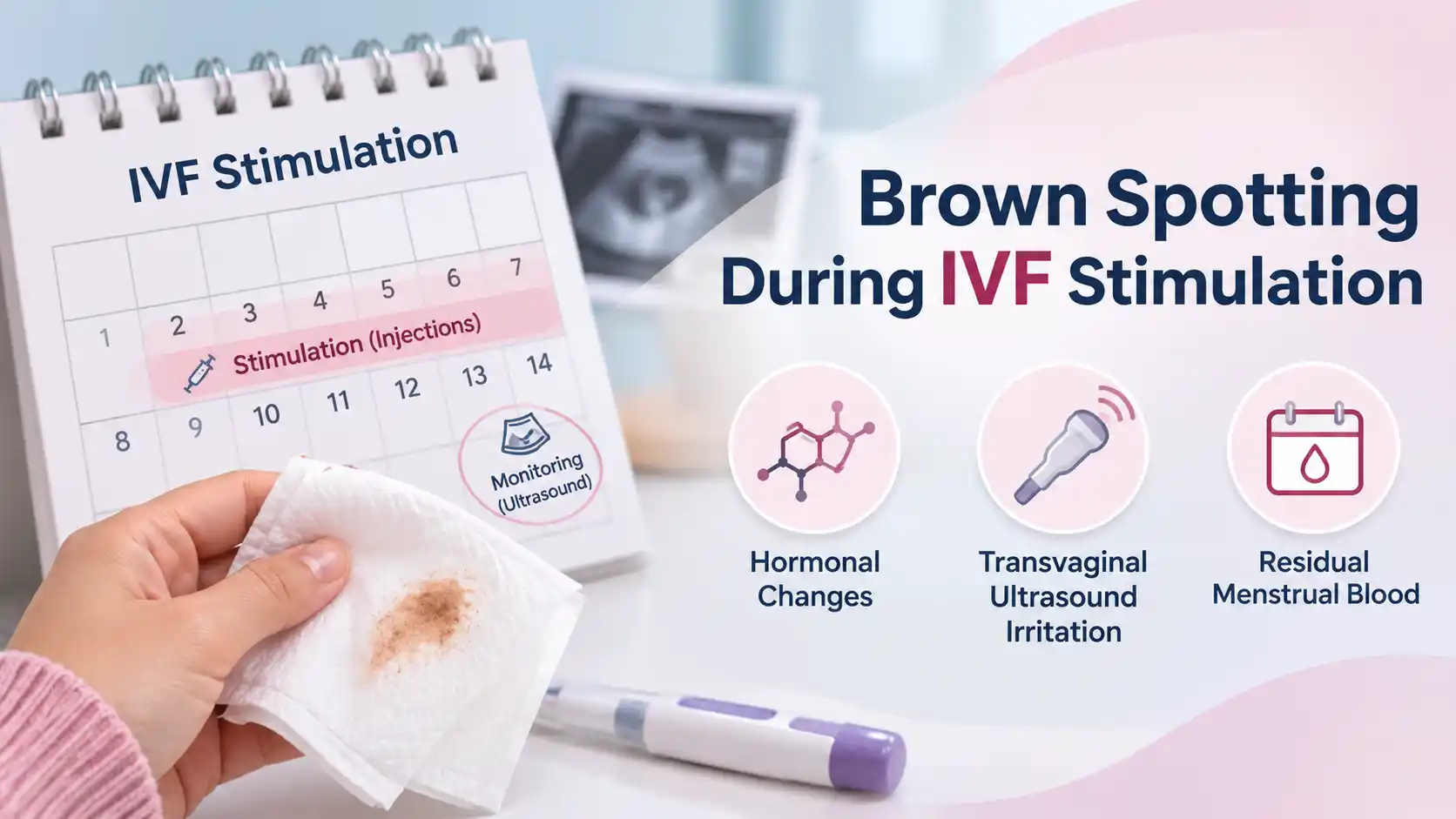
Table of contents31 sections
The amount of bleeding and accompanying symptoms matter more than its color. A few brown or pink spots are different from period-like or heavy bleeding. Inform your fertility clinic about new bleeding, and never stop or change your IVF medication without medical advice.
How Much Bleeding During IVF Stimulation Is Normal?
The following guide can help you describe what you are experiencing and understand how urgently to contact your clinic. It is not a diagnostic tool, and your clinic's instructions should always take priority.
| What you notice | What it may look like | What to do |
|---|---|---|
| A few spots | Brown or pink marks when wiping | Record when it started and inform your clinic |
| Light spotting | Small amounts on a panty liner, without increasing flow | Contact your fertility team for advice, particularly if it is new or recurring |
| Period-like bleeding | Red or brown flow similar to your usual period | Contact your clinic the same day for assessment |
| Heavy bleeding | Rapidly soaking pads, passing large clots, or bleeding with weakness or dizziness | Seek urgent medical assessment; do not wait for your next monitoring appointment |
Light spotting can occur during an IVF cycle without necessarily disrupting treatment. However, the color or amount alone cannot establish the cause. Your clinic may consider your medication protocol, ultrasound findings, hormone results, and symptoms before deciding whether anything needs to change.
What Does Brown, Pink, or Red Spotting Mean During IVF Stimulation?
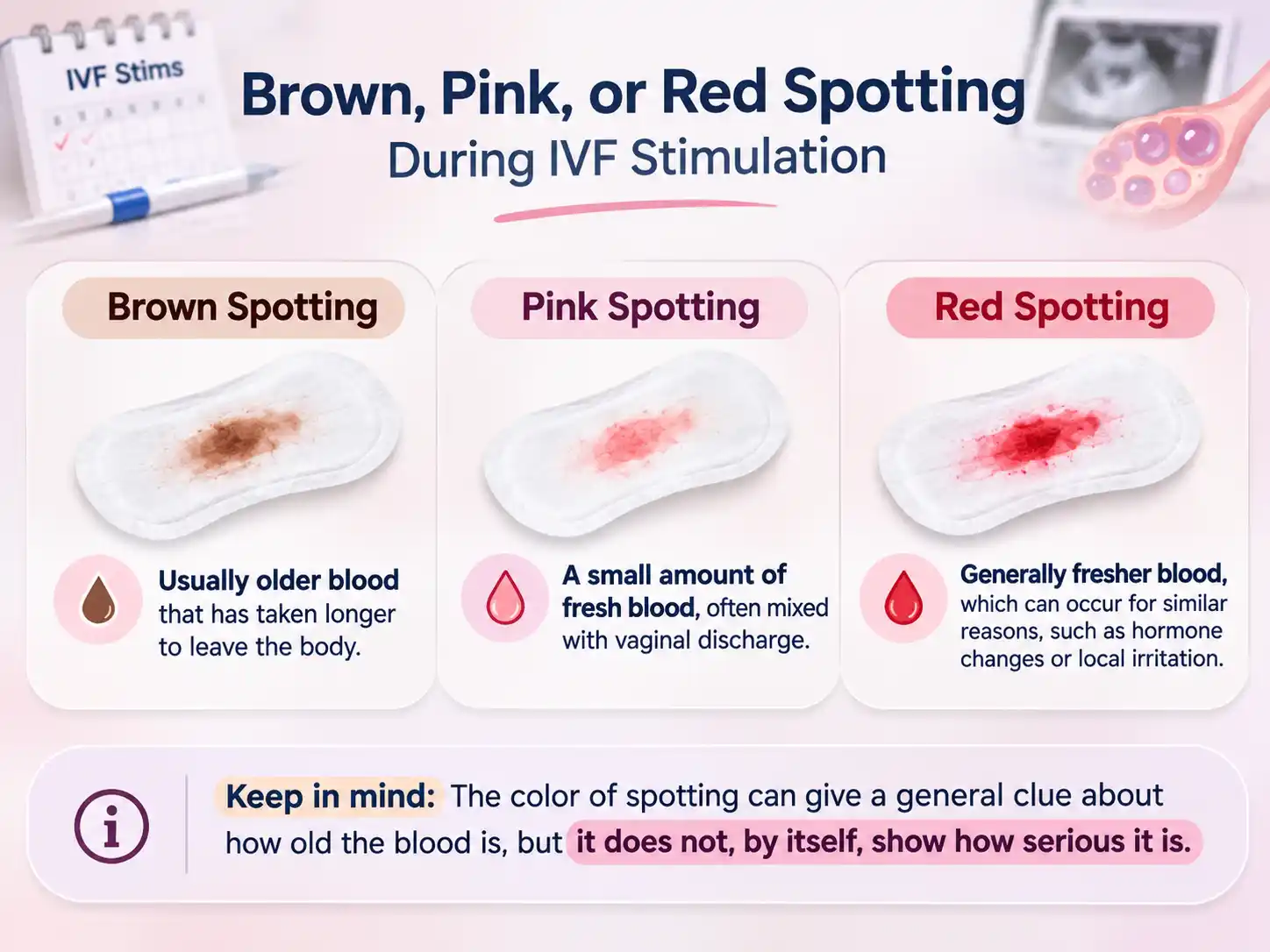
The color of vaginal bleeding can offer a general clue about how long blood may have been present, but it cannot reliably identify the source or seriousness of the bleeding.
- Brown spotting: Often represents older blood that has taken longer to leave the reproductive tract. It may appear near the end of menstruation or after hormonal changes.
- Pink spotting: May occur when a small amount of fresh blood mixes with vaginal discharge.
- Bright-red bleeding: Usually represents fresher blood, but it is not automatically more dangerous than brown spotting. The amount, duration, and associated symptoms matter more.
For example, a few pink spots after a transvaginal ultrasound may be less concerning than persistent brown bleeding accompanied by pelvic pain or dizziness.
It is also important not to confuse spotting during ovarian stimulation with implantation bleeding. If you have not yet had an embryo transfer in the current cycle, implantation from that cycle cannot explain spotting during the stimulation phase.
Why Does Brown Spotting Happen During IVF Stimulation?
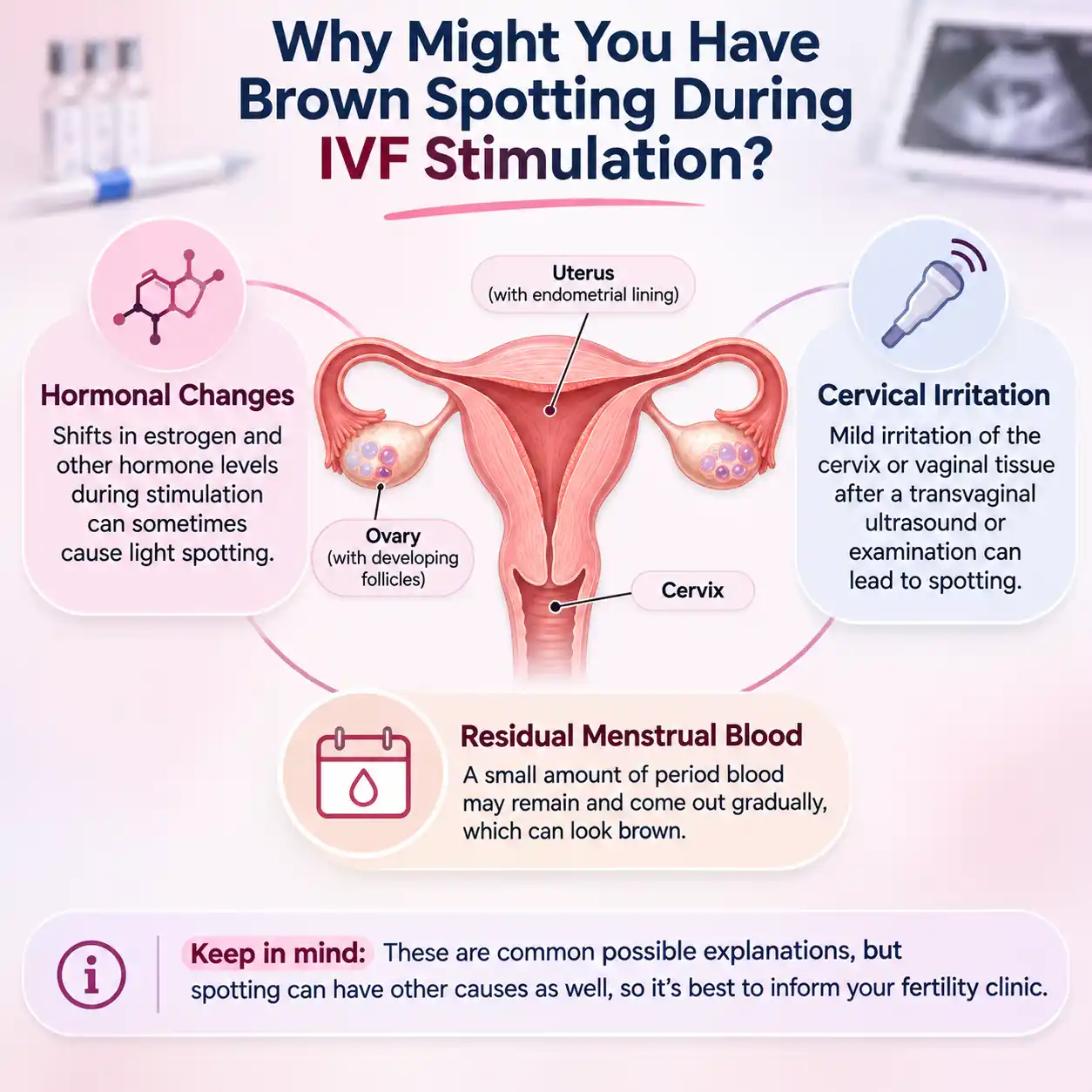
There is no single established cause of brown spotting during IVF stimulation. Several factors may contribute, depending on your medication protocol and where you are in the cycle.
1. Residual Menstrual Blood
If stimulation begins shortly after your period, a small amount of menstrual blood may remain in the reproductive tract and come out gradually. It can appear brown rather than red.
This may be more noticeable when menstrual bleeding has recently become lighter but has not completely stopped.
2. Hormonal Changes After Pretreatment Medication
Some IVF protocols use hormonal pretreatment, such as combined oral contraceptive pills or progesterone, to help schedule or prepare the treatment cycle.
After these medications are stopped or adjusted, changes in hormone exposure may be followed by withdrawal bleeding or breakthrough spotting.
Certain hormonal medications, particularly progestin-only contraceptives, can cause irregular bleeding or spotting. In some patients, bleeding after stopping hormonal pretreatment may continue into the first few days of stimulation and sometimes resemble a regular period.
The effect depends on the medication and protocol. It would not be accurate to assume that every IVF injection directly causes vaginal bleeding.
3. Hormonal Changes During Ovarian Stimulation
During ovarian stimulation, medications encourage several follicles to grow at the same time. As the follicles develop, they produce increasing amounts of estradiol.
Estradiol helps stimulate the growth of the uterine lining. However, changes in hormone levels do not always produce the same bleeding pattern in every patient. Breakthrough spotting may occur during a hormonally changing cycle, but there is not enough evidence to say that a rise in estradiol directly causes brown spotting in every IVF patient.
Spotting alone cannot tell you whether estrogen levels are too high or too low, whether follicles are growing normally, or whether your medication dose needs changing. Your clinic interprets ultrasound findings and relevant hormone results in the context of your treatment protocol.
4. Vaginal or Cervical Irritation
The vaginal or cervical tissues can sometimes bleed slightly after local contact or irritation. For example, a recent vaginal examination or transvaginal ultrasound may be followed by a small amount of spotting.
Recent sexual intercourse may also be relevant if spotting begins shortly afterward. Penetration can sometimes irritate sensitive vaginal or cervical tissue and lead to light bleeding.
However, during ovarian stimulation, the ovaries may become enlarged. Follow your clinic's advice about intercourse during IVF, particularly as you approach the trigger shot and egg retrieval.
5. Other Gynecological Causes
Conditions that can cause bleeding outside menstruation may also be present during an IVF cycle. These include cervical inflammation, vaginal or cervical infection, cervical polyps, and uterine polyps or fibroids.
If spotting is persistent, recurrent, or accompanied by unusual discharge, odor, itching, fever, or pelvic pain, your clinic may recommend further assessment.
Can Brown Spotting Happen on Day 5, Day 9, or Day 12 of IVF Stimulation?
Yes. Spotting can occur at different points during ovarian stimulation, and the timing alone does not establish whether the cycle is progressing normally.
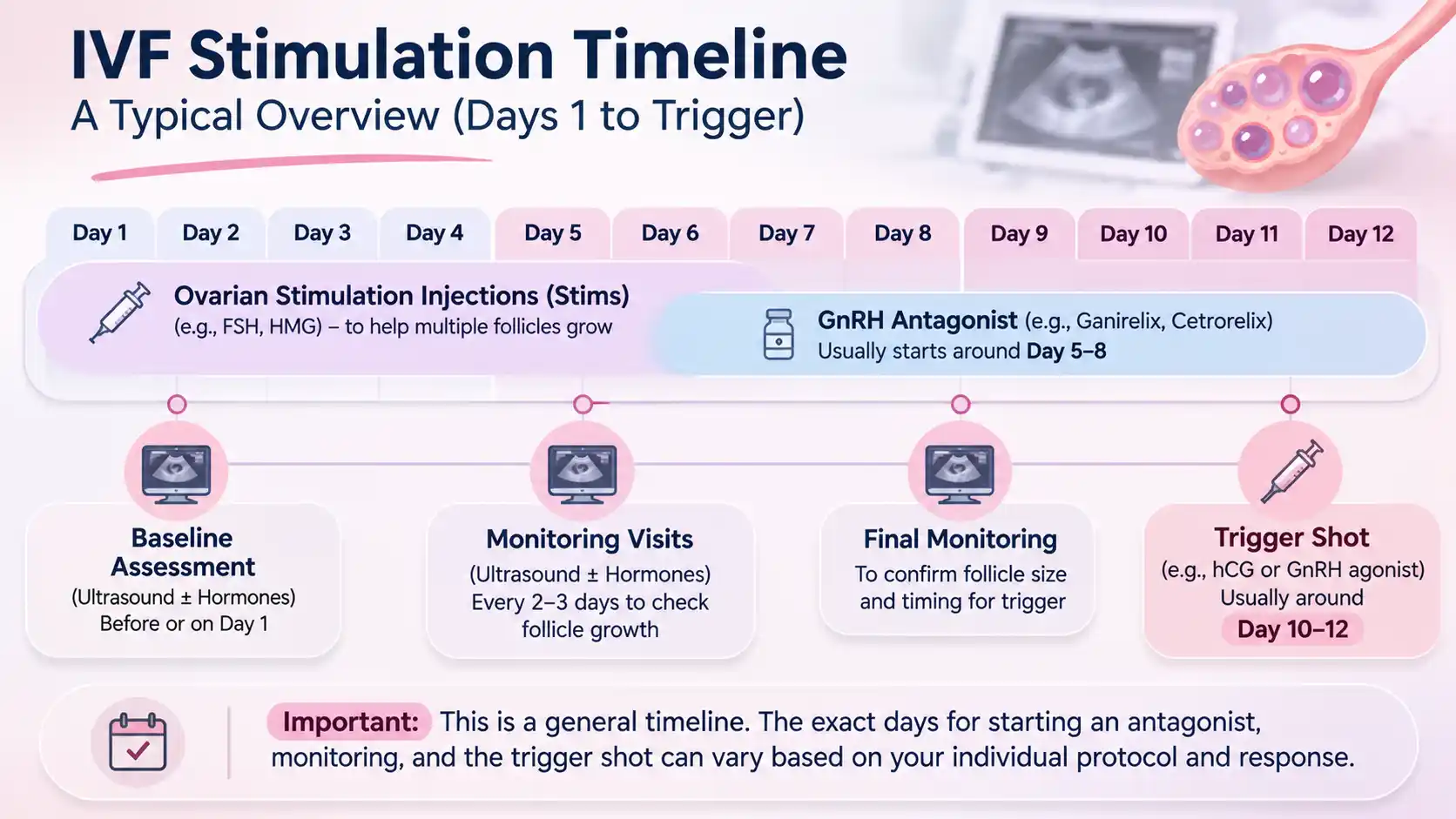
Spotting on Days 5–7
Some patients notice brown or pink discharge during the first week of stimulation. Possible explanations include residual menstrual blood, hormonal changes after pretreatment, or irritation following monitoring.
A few spots during this period do not automatically mean that follicle development has stopped.
Spotting on Days 9–12
Days 9–12 may fall later in stimulation for many patients, although treatment length varies. In some protocols, this period overlaps with the start of a GnRH antagonist medication such as Ganirelix or Cetrorelix.
These medications suppress the premature LH surge and help prevent ovulation before the planned trigger. Spotting is listed among the possible side effects of GnRH antagonist treatment.
If spotting begins around the time you start an antagonist, the timing may be relevant. However, it does not prove that the medication caused the bleeding or that something is wrong with your cycle.
Tell your clinic when the spotting started and which medication you had recently added. Do not skip or delay an antagonist injection without instructions from your fertility team.
Can Brown Spotting on Trigger Day Mean Premature Ovulation?
No. Spotting on the day of your trigger shot does not, by itself, mean that premature ovulation has occurred.
This is a common concern because the trigger shot is given near the end of ovarian stimulation, when patients are closely monitoring their symptoms.
However, vaginal bleeding is not a reliable way to determine whether ovulation has already happened. Your fertility team assesses follicle development and decides when to administer the trigger based on ultrasound findings and the overall clinical picture.
In antagonist protocols, medications such as Ganirelix and Cetrorelix are specifically used to prevent a premature LH surge and ovulation.
The timing of final oocyte maturation is not determined by spotting or estradiol levels alone. If you notice bleeding on trigger day, contact your clinic and follow the exact trigger instructions you were given.
Do not change the trigger time or medication schedule based on the appearance of discharge.
Does Brown Spotting Mean Your Uterine Lining Is Shedding?
Not necessarily. A small amount of vaginal spotting does not prove that your endometrium is shedding or that you have lost the uterine lining needed for embryo implantation.
The blood may come from the cervix or vaginal tissue rather than the uterus. Even when the source is uterine, the amount of visible discharge does not reliably indicate the thickness or condition of the endometrium.
Your fertility team can assess the uterine lining through ultrasound when clinically appropriate. Hormone levels, particularly progesterone near the end of stimulation, may also influence whether a fresh embryo transfer is suitable.
The important distinction is that spotting and endometrial thickness are not interchangeable measurements. Do not assume that brown discharge means your uterine lining has become too thin or that a fresh transfer is no longer possible.
Does Brown Spotting Affect Follicle Growth, Egg Quality, or Egg Retrieval?
Light brown spotting alone does not establish that follicle growth has been disrupted or that egg quality has declined.
The visible spotting is not a direct measurement of ovarian activity, the number of developing follicles, or the maturity of the eggs.
Even if bleeding resembles a period, it does not by itself show that follicle growth has stopped. Your clinic uses ultrasound monitoring to assess your ovarian response and determine whether the follicles are developing as expected.
Spotting alone is also not evidence of premature ovulation. Your fertility team uses ultrasound and, when appropriate, hormone monitoring to assess follicle development and the timing of the trigger shot.
In many cases, light spotting does not require the egg retrieval procedure to be cancelled. However, the decision depends on its cause, severity, and your overall clinical condition.
If you are approaching egg retrieval, tell your clinic about any new or ongoing bleeding so the team can decide whether additional assessment is needed.
Can Brown Spotting Affect Fresh Embryo Transfer?
Not necessarily. Spotting does not automatically mean that a fresh embryo transfer must be cancelled.
Egg retrieval and embryo transfer are separate decisions. Even when ovarian stimulation and egg collection proceed as planned, the medical team may decide that a fresh transfer is not the most appropriate option for that cycle.
The decision to proceed with a fresh embryo transfer depends on several factors, including embryo development, your clinical condition, hormone levels, and the uterine environment.
For example, a premature rise in progesterone near the end of ovarian stimulation can advance endometrial development and affect the timing of the implantation window. Research suggests that this may influence implantation and pregnancy outcomes in some fresh-transfer cycles. This is a separate issue from brown spotting itself.
If the clinical circumstances are not suitable for fresh transfer, your embryos may be frozen for a later frozen embryo transfer.
Brown spotting alone is not a reason to assume that a freeze-all cycle will be necessary.
Can Blood Thinners or Aspirin Cause Spotting During IVF Stimulation?
Some patients take aspirin or anticoagulant medication as part of an individual treatment plan or for an unrelated medical condition.
These medications can affect blood clotting, so your fertility team needs to know if you use them when evaluating unexpected bleeding.
However, there is not enough IVF-specific evidence to identify prescribed aspirin or anticoagulants as a common direct cause of brown spotting during ovarian stimulation.
Tell your clinic the medication name, dose, and reason for taking it. Never stop prescribed aspirin, heparin, or another anticoagulant on your own, because doing so may create risks unrelated to the spotting.
Should You Continue IVF Medication If You Notice Brown Spotting?
Do not stop, skip, or change your prescribed IVF medication because of light brown spotting unless your fertility specialist tells you to.
Stopping stimulation injections or changing medication doses without medical advice could interfere with your treatment schedule.
If you are still bleeding when your injections are due to start, your clinic should decide whether to proceed based on your baseline assessment, which may include an ultrasound and hormone tests.
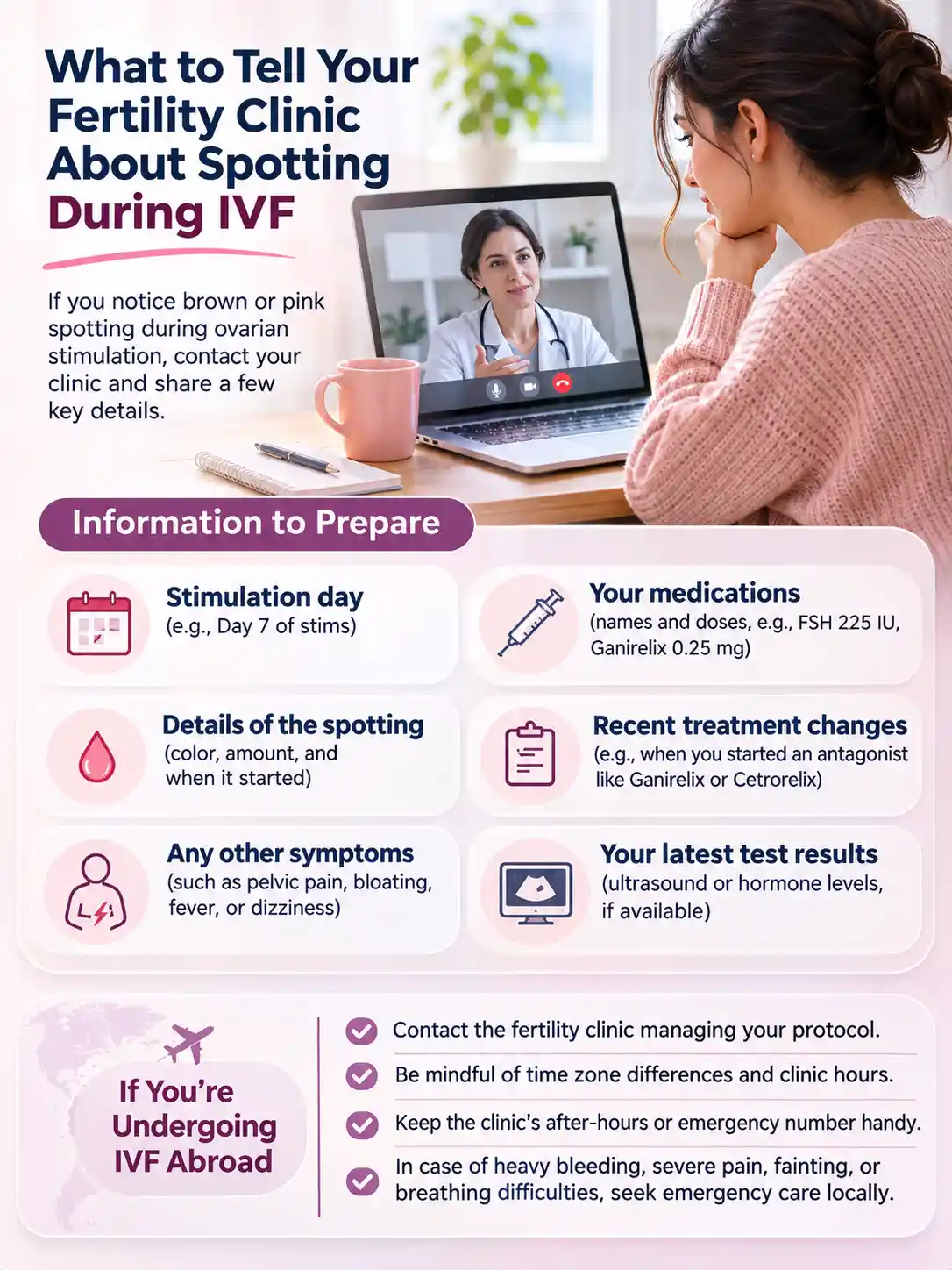
When contacting your clinic, provide:
The day of stimulation and the date spotting started.
The color and amount of bleeding.
Whether it is increasing, decreasing, or staying the same.
The names and doses of your current medications.
Any recent medication changes, including the start of an antagonist.
Any accompanying symptoms, such as pain, fever, or dizziness.
Your clinic can determine whether you need an earlier review, additional testing, or no change to your current treatment plan.
What Should International IVF Patients Do If They Notice Spotting Abroad?
If you are receiving fertility treatment in another country, a time difference or language barrier should not delay reporting unexpected bleeding.
Your first point of contact should be the fertility clinic responsible for your stimulation protocol. If you are working with an international treatment coordinator, they may help you communicate with the clinic, but medical decisions should come from your treating fertility team.
Before contacting them, prepare the following information:
- Your current stimulation day and the date of your last menstrual period.
- Your medication protocol, including injection names and doses.
- The date and time of your most recent injections.
- Whether you have started Ganirelix, Cetrorelix, or another antagonist.
- The amount and color of the spotting, and when it began.
- Any pain, dizziness, fever, or other symptoms.
- Your latest ultrasound or hormone test results, if available.
Ask your clinic for an after-hours contact number and written instructions about what to do if symptoms occur outside its working hours.
If you experience heavy bleeding, fainting, severe abdominal pain, or shortness of breath, seek emergency medical care where you are. Do not wait for a reply from another country before getting urgent help.
When Should You Contact Your Fertility Clinic?
Contact your fertility clinic when you notice new bleeding or spotting during ovarian stimulation, even if it is only a small amount. Your care team should know about it so they can decide whether you need an earlier assessment.
Seek prompt medical advice if you experience:
- Bleeding similar to or heavier than your usual period.
- Persistent or worsening pelvic or abdominal pain.
- Severe or one-sided pelvic pain.
- Dizziness, fainting, or marked weakness.
- Fever or foul-smelling vaginal discharge.
Symptoms of ovarian hyperstimulation syndrome (OHSS) also require prompt medical assessment. These include significant abdominal swelling or pain, persistent nausea or vomiting, reduced urination, and shortness of breath.
OHSS is not a direct explanation for brown spotting, but it is an important potential complication of ovarian stimulation. If you experience these symptoms, contact your fertility team urgently or seek emergency care when symptoms are severe.
Frequently Asked Questions
Can brown spotting during stims be normal?
Yes. Light brown spotting during IVF stims can occur and may be associated with residual menstrual blood, hormonal changes, or mild irritation. It does not automatically mean that the treatment is failing, but new bleeding should be reported to your fertility clinic.
Can stimming cause pink spotting?
Pink spotting may occur when a small amount of fresh blood mixes with vaginal discharge. Possible explanations include hormonal changes, cervical irritation, or recent vaginal monitoring. The amount and associated symptoms matter more than the color.
Is bleeding during stims a sign that my period is starting?
Not necessarily. Withdrawal bleeding after stopping hormonal pretreatment can resemble a period, but bleeding during stimulation can have other explanations. Your clinic may use ultrasound and hormone tests to assess your cycle.
Can spotting after starting Ganirelix or Cetrotide be a side effect?
Spotting is listed among the possible side effects of GnRH antagonist medications such as Ganirelix and Cetrorelix. However, the timing alone cannot confirm that the medication caused your bleeding. Tell your clinic and continue your medication as prescribed unless instructed otherwise.
Does spotting on trigger day mean I have ovulated?
No. Spotting alone cannot confirm premature ovulation. Your fertility team assesses follicle development and other clinical findings to determine whether the trigger should be given as planned.
Does brown spotting mean my uterine lining is coming away?
No. Brown discharge does not establish that your endometrium is shedding or becoming too thin. The source of bleeding and the condition of the uterine lining are different issues, and ultrasound assessment may be needed when clinically appropriate.
Is bright-red bleeding more dangerous than brown spotting?
Not necessarily. Bright-red blood is generally fresher, while brown blood is usually older. The amount, duration, and accompanying symptoms are more useful when deciding how urgently you need medical assessment.
Can I continue IVF injections if I am spotting?
Do not stop or change your injections without speaking to your fertility clinic. Your care team can decide whether the spotting requires an assessment or whether you should continue your existing protocol.
Should I be worried about spotting before egg retrieval?
A small amount of spotting does not automatically mean that egg retrieval will be postponed. Your clinic will consider the amount of bleeding, associated symptoms, and monitoring results before deciding whether the procedure can proceed as scheduled.
The Bottom Line
Brown spotting during IVF stimulation is often minor, but its cause cannot be determined by color or timing alone. Hormonal changes, residual menstrual blood, local irritation, and sometimes GnRH antagonist medication may be relevant.
A few spots do not automatically mean premature ovulation, loss of the uterine lining, or IVF failure. Record what you notice, inform your fertility clinic, and continue your medication as prescribed. If bleeding becomes heavy or occurs with severe pain, fainting, or breathing difficulties, seek urgent medical care.
Scientific References
ESHRE Guideline Group on Ovarian Stimulation, Ata B, et al. (2026). ESHRE guideline: ovarian stimulation for IVF/ICSI: an update in 2025. Human Reproduction, 41(4), 498–514. https://doi.org/10.1093/humrep/deag018
PubMed | Full textPractice Committee of the American Society for Reproductive Medicine. (2024). The use of hormonal contraceptives in fertility treatments: a committee opinion. Fertility and Sterility, 122(2), 243–250. https://doi.org/10.1016/j.fertnstert.2024.02.032
PubMedFarquhar C, Rombauts L, Kremer JA, et al. (2017). Oral contraceptive pill, progestogen or oestrogen pretreatment for ovarian stimulation protocols for women undergoing assisted reproductive techniques. Cochrane Database of Systematic Reviews, 5, CD006109. https://doi.org/10.1002/14651858.CD006109.pub3
PubMedPractice Committee of the American Society for Reproductive Medicine. (2024). Prevention of moderate and severe ovarian hyperstimulation syndrome: a guideline. Fertility and Sterility, 121(2), 230–245. https://doi.org/10.1016/j.fertnstert.2023.11.013
PubMedKalakota NR, George LC, Morelli SS, Douglas NC, Babwah AV. (2022). Towards an Improved Understanding of the Effects of Elevated Progesterone Levels on Human Endometrial Receptivity and Oocyte/Embryo Quality during Assisted Reproductive Technologies. Cells, 11(9), 1405. https://doi.org/10.3390/cells11091405
PubMed | Full textGurunath S. (2022). Premature Progesterone Elevation in in vitro Fertilisation Cycles – Current Perspectives. Journal of Human Reproductive Sciences, 15(4), 325–336. https://doi.org/10.4103/jhrs.jhrs_162_22
PubMed | Full textSociety for Assisted Reproductive Technology (SART). GnRH Antagonist Therapy. Patient information on Ganirelix, Cetrorelix, and potential side effects, including spotting.
https://www.sart.org/patients/a-patients-guide-to-assisted-reproductive-technology/stimulation/gnrh-antagonist-therapy/
Comments 0
Share a question or experience related to this article. Comments appear after review by our team.
No comments yet. You can start the conversation.